
immersive translate logoImmersive Translate
English

The Ultimate
AI Translator
for Web, PDFs and Videos

Immersive Translate is a free, bilingual AI translation tool that supports website translation, PDF translation with original layouts preserved, video subtitle translation (YouTube, Netflix), online meeting translation, image translation, and comic translation—all in one platform. Powered by AI terminology libraries and context-aware translation, it integrates over 20 leading translation engines, including ChatGPT, DeepL, DeepSeek, and Gemini, and supports more than 100 language pairs. Available on Chrome, Edge, iOS, and mobile devices.
google
openAI
Gemini
DeepL
Microsoft
Tencent Smart
Volctrans
Youdao
DeepSeek
Baidu
Niu
Caiyun
Tencent
OpenL
BigModel
SiliconFlow
google
openAI
Gemini
DeepL
Microsoft
Tencent Smart
Volctrans
Youdao
DeepSeek
Baidu
Niu
Caiyun
Tencent
OpenL
BigModel
SiliconFlow
google
openAI
Gemini
DeepL
Microsoft
Tencent Smart
Volctrans
Youdao
DeepSeek
Baidu
Niu
Caiyun
Tencent
OpenL
BigModel
SiliconFlow

Your All-in-One AI Translation Solution

Immersive Translate helps you break language barriers when communicating with international clients, partners, or colleagues. Here are some of the most popular ways to use Immersive Translate's AI Translator.

What is Wikipedia?

Wikipedia is the world's largest free online encyclopedia, offering millions of articles across 300+ languages on virtually every topic imaginable. It's an invaluable knowledge resource for students, researchers, and curious minds worldwide — but language barriers lock out non-native speakers from accessing the depth of content available in other language editions.
Need a Wikipedia translator?

You want to explore Wikipedia articles written in foreign languages without losing context or constantly switching between tabs. Traditional translation tools break Wikipedia's complex layout — references disappear, infoboxes scramble, and you lose the original text entirely, making it impossible to verify terminology or cross-reference sources in both languages simultaneously.

What Immersive Translate Delivers for Wikipedia
Immersive Translate keeps you on Wikipedia, displaying original and translated text side by side without leaving the page. Its intelligent content recognition translates article body, references, and citations while preserving Wikipedia's structure—skipping navigation menus and sidebars. Switch between 20+ AI engines including DeepL, OpenAI, and Google. Bilingual mode lets you verify terminology in the source language instantly, while mouse hover translation provides on-demand lookup for specific terms without translating the entire article.

Read foreign websites with bilingual context

1

Open the original webpage you actually want to read

Start from the live source instead of switching to copied text elsewhere.

2

Turn on Immersive Translate and keep both languages together

Read the translation while still checking the original wording and structure.

3

Follow posts, comments, and articles without losing context

Stay accurate when browsing social media, forums, and news across languages.

Wikipedia Translation Made Effortless and Accurate

Immersive Translate transforms Wikipedia browsing with intelligent bilingual translation that preserves the encyclopedia's structure while making any article accessible in your language.
Smart Content Recognition

Automatically identifies Wikipedia's main article content while preserving infoboxes, citations, and navigation elements untranslated. Only the encyclopedic text gets translated for clean, distraction-free reading.

Bilingual Side-by-Side Display

Original and translated paragraphs appear together, letting you verify technical terms, proper nouns, and scientific names instantly. Perfect for cross-referencing Wikipedia's precise terminology across languages.


Bilingual Side-by-Side Display
20+ Translation Engines

Switch between DeepL, Google Translate, OpenAI, DeepSeek, and more to find the best translation quality for your language pair. One tool, unlimited engine flexibility for Wikipedia's diverse content.

Works Across All Wikipedias

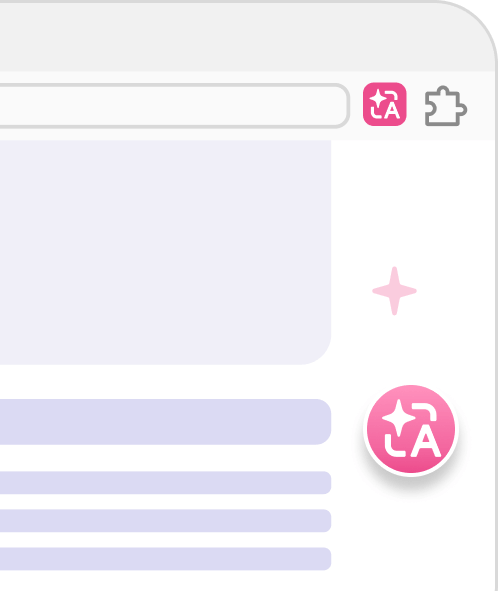
Translate any Wikipedia edition instantly—from English to Japanese Wikipedia, German to Korean, or any of 300+ language versions. No setup required, just browse and translate seamlessly.
Works Across All Wikipedias
Hover Translation on Demand

Hover over any paragraph to see instant translation without converting the entire article. Ideal for quickly scanning sections, checking definitions, or exploring unfamiliar topics on Wikipedia.

100+ Languages Supported

Access Wikipedia knowledge in any language with support for 100+ language pairs. Customize font size, translation style, and display mode to match your reading preferences perfectly.

100+ Languages Supported

Who Uses Wikipedia Translators

Cross-Language Research Barriers

Cross-Language Research Barriers

Students researching topics need Wikipedia articles in foreign languages translated instantly while preserving citations, references, and technical terminology for accurate academic work.
Accessing Global Knowledge

Accessing Global Knowledge

Academic researchers require bilingual Wikipedia access to verify original sources, compare language-specific content variations, and ensure terminology accuracy across different language editions.
Curiosity-Driven Learning

Curiosity-Driven Learning

Hobbyists exploring niche topics find richer content in foreign Wikipedia editions, needing seamless translation to access specialized knowledge unavailable in their native language.

Wikipedia Website Translator: Frequently Asked Questions

Does Immersive Translate work on Wikipedia and preserve its layout?
Yes, Immersive Translate works seamlessly on Wikipedia across all language versions. The tool intelligently recognizes Wikipedia's main content area and translates article text while preserving the site's original layout structure. Navigation menus, sidebars, infoboxes, and reference sections remain intact and functional. You can choose between bilingual mode (original and translation side by side) or translation-only mode, both of which maintain Wikipedia's familiar reading experience without breaking the page structure or interfering with embedded images, tables, and citation links.
Can I see the original Wikipedia text after translating to verify accuracy?
Absolutely. This is one of Immersive Translate's core strengths for Wikipedia readers. In bilingual mode, the original Wikipedia text appears above each paragraph with the translation directly below, allowing you to cross-reference both languages in real time. This is especially valuable when reading technical articles, historical entries, or scientific content where terminology precision matters. You can also use the mouse hover translation feature to instantly view translations of specific paragraphs without translating the entire page, giving you complete control over when and what to translate while always keeping the original text accessible.
How is Immersive Translate different from Google Translate page translation for Wikipedia?
Unlike Google Translate's page translation which replaces the original text entirely and often breaks Wikipedia's complex layout, Immersive Translate displays original and translated content side by side without navigating away from Wikipedia. Google Translate typically disrupts infoboxes, tables, and reference formatting, while Immersive Translate's intelligent content recognition preserves these elements. Additionally, Immersive Translate gives you access to 20+ translation engines including DeepL, OpenAI, DeepSeek, and Claude—not just Google's engine—allowing you to switch between services to find the most accurate translation for specialized Wikipedia content. The bilingual display also lets you verify translations against the source text instantly, something Google's replacement-style translation cannot offer.
Which languages does Immersive Translate support for Wikipedia articles?
Immersive Translate supports over 100 language pairs, covering virtually all Wikipedia language editions. Whether you're reading English Wikipedia and translating to Chinese, Spanish, Arabic, or Hindi, or accessing non-English Wikipedia versions and translating to your native language, the tool handles it seamlessly. This makes it ideal for researchers, students, and curious readers who want to access Wikipedia's vast multilingual knowledge base. The translation works bidirectionally, so you can translate from any supported language to any other supported language, opening up Wikipedia articles that would otherwise be inaccessible due to language barriers.
Which translation engine gives the best results for Wikipedia content?
For Wikipedia articles, DeepL and OpenAI models typically deliver the most natural and contextually accurate translations, especially for technical, scientific, and historical content. DeepL excels at maintaining the formal, encyclopedic tone of Wikipedia entries, while OpenAI models like ChatGPT provide excellent context awareness for complex sentences and specialized terminology. For academic or scientific Wikipedia articles, DeepSeek also performs exceptionally well with technical vocabulary. The advantage of Immersive Translate is that you can switch between these 20+ translation engines instantly from the same interface, allowing you to compare results and choose the engine that works best for your specific Wikipedia article topic without needing multiple tools or browser tabs.
Can I translate only specific sections of a Wikipedia article instead of the whole page?
Yes, Immersive Translate offers flexible translation options perfect for Wikipedia's long-form articles. You can use the mouse hover translation feature to translate individual paragraphs on demand by simply hovering over them—ideal when you only need clarification on specific sections rather than translating an entire lengthy article. You can also customize which areas of the page get translated by adjusting the tool's content recognition settings. This selective translation approach is particularly useful for Wikipedia articles with extensive reference sections, external links, or technical appendices that you may not need translated, saving time and maintaining focus on the content that matters most to you.
Can I customize how translations appear on Wikipedia pages?
Yes, Immersive Translate offers extensive customization options for Wikipedia reading. You can adjust translation display modes (bilingual paragraph-by-paragraph, translation-only, or hover-to-translate), customize font sizes, colors, and spacing to match your reading preferences, and even set up keyboard shortcuts for quick translation toggling. For Wikipedia specifically, you can configure whether to translate image captions, infobox content, or leave certain elements in their original language. These customization features ensure that whether you're doing deep research requiring constant source-text verification or casual browsing where you prefer a clean translated view, Immersive Translate adapts to your Wikipedia reading workflow rather than forcing you into a one-size-fits-all translation experience.

Explore more webpage translators