
immersive translate logoImmersive Translate
English

The Ultimate
AI Translator
for Web, PDFs and Videos

Immersive Translate is a free, bilingual AI translation tool that supports website translation, PDF translation with original layouts preserved, video subtitle translation (YouTube, Netflix), online meeting translation, image translation, and comic translation—all in one platform. Powered by AI terminology libraries and context-aware translation, it integrates over 20 leading translation engines, including ChatGPT, DeepL, DeepSeek, and Gemini, and supports more than 100 language pairs. Available on Chrome, Edge, iOS, and mobile devices.
google
openAI
Gemini
DeepL
Microsoft
Tencent Smart
Volctrans
Youdao
DeepSeek
Baidu
Niu
Caiyun
Tencent
OpenL
BigModel
SiliconFlow
google
openAI
Gemini
DeepL
Microsoft
Tencent Smart
Volctrans
Youdao
DeepSeek
Baidu
Niu
Caiyun
Tencent
OpenL
BigModel
SiliconFlow
google
openAI
Gemini
DeepL
Microsoft
Tencent Smart
Volctrans
Youdao
DeepSeek
Baidu
Niu
Caiyun
Tencent
OpenL
BigModel
SiliconFlow

Your All-in-One AI Translation Solution

Immersive Translate helps you break language barriers when communicating with international clients, partners, or colleagues. Here are some of the most popular ways to use Immersive Translate's AI Translator.

What is Google Scholar?

Google Scholar is a freely accessible academic search engine indexing scholarly literature across disciplines — journal articles, theses, books, conference papers, and preprints. It's an essential research tool for students, academics, and professionals worldwide, but most papers are published in English or other foreign languages, creating a significant barrier for non-native speakers trying to access cutting-edge research in their field.
Need a Google Scholar translator?

You want to read research papers in your native language without losing access to the original terminology and citations. Traditional solutions fall short: browser built-in translation replaces the entire page, making it impossible to verify technical terms; copy-pasting abstracts into Google Translate breaks your research flow; and generic page translators can't handle academic formatting, mathematical expressions, or reference lists, often producing garbled output that obscures critical research findings.

What Immersive Translate Delivers for Google Scholar
Immersive Translate keeps you on Google Scholar while displaying original and translated abstracts side by side. Its intelligent content recognition translates article titles, abstracts, and citations—skipping navigation clutter and ads. Switch between 20+ AI engines including DeepL, OpenAI, and DeepSeek. Bilingual mode lets you verify terminology in the source language. Mouse hover translation provides instant lookup without translating the entire page.

Read foreign websites with bilingual context

1

Open the original webpage you actually want to read

Start from the live source instead of switching to copied text elsewhere.

2

Turn on Immersive Translate and keep both languages together

Read the translation while still checking the original wording and structure.

3

Follow posts, comments, and articles without losing context

Stay accurate when browsing social media, forums, and news across languages.

Complete Google Scholar Translation Solution

Immersive Translate delivers the most comprehensive translation experience for Google Scholar, combining intelligent academic content recognition with powerful bilingual display and 20+ translation engines.
Bilingual Side-by-Side Display

Original and translated text shown together paragraph by paragraph, so you can verify technical terms, author names, and citations while reading translated papers seamlessly.

Smart Content Recognition

Automatically identifies and translates the main paper content while preserving formulas, citations, and reference lists intact—no clutter, just clean academic reading.
Smart Content Recognition
20+ Translation Engines

Switch between DeepL, OpenAI, Google Translate, DeepSeek, and other leading AI models to find the best translation quality for your specific language pair and subject.

Works Across All Platforms

Translates Google Scholar search results, abstracts, and linked papers from any journal or repository—no special setup, just install and read immediately.
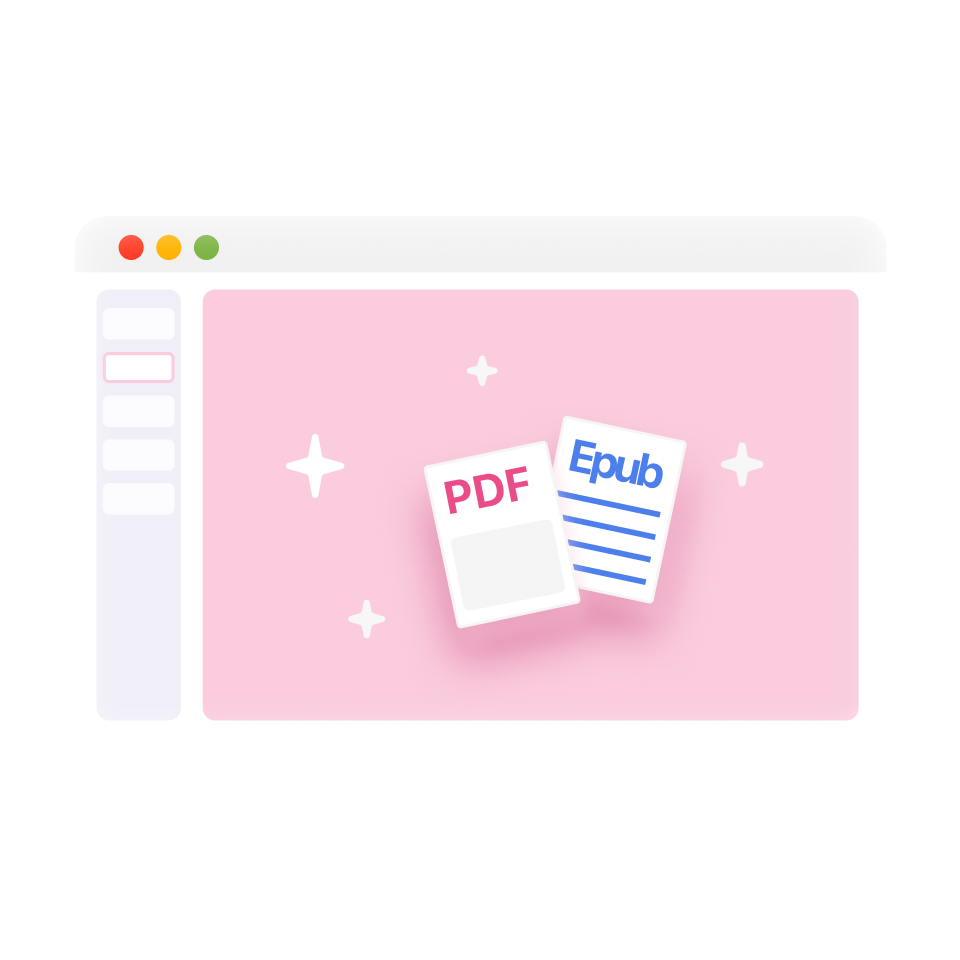
Works Across All Platforms
Mouse Hover Translation

Hover over any abstract or paragraph to get instant translation on demand, perfect for quickly scanning search results without translating entire pages unnecessarily.

100+ Languages Supported

Access research in any language with support for over 100 language pairs, plus customizable display modes to match your reading workflow and preferences.
100+ Languages Supported

Who Uses Google Scholar Translation

Cross-Language Literature Review

Cross-Language Literature Review

Academic researchers need bilingual access to foreign-language papers on Google Scholar, comparing original terminology while understanding full context without switching tabs or losing citations.
Multilingual Academic Resource Access

Multilingual Academic Resource Access

Graduate students exploring international research require instant translation of Google Scholar results and abstracts, maintaining original academic phrasing for accurate comprehension and proper citation.
Academic Translation Preparation

Academic Translation Preparation

Professional academic translators use bilingual Google Scholar display to research terminology consistency, verify technical usage across papers, and build glossaries before undertaking formal translation projects.

Google Scholar Website Translator: 7 Essential Questions Answered

Does Immersive Translate work on Google Scholar for translating research papers?
Yes, Immersive Translate works seamlessly on Google Scholar. When you browse search results or open paper abstracts on Google Scholar, you can translate the entire page with one click. The tool intelligently recognizes the main content areas—titles, abstracts, author information, and citation details—while preserving the original layout. For full-text papers linked from Google Scholar (such as PDFs or HTML versions on publisher sites), Immersive Translate offers dedicated PDF translation and webpage translation capabilities. If you're accessing papers on arXiv through Google Scholar, the tool automatically detects and loads the HTML/ar5iv version for superior translation quality, filtering out non-essential elements like reference lists and author bios to deliver a clean reading experience focused on the research content itself.
Can I see the original English text after translating a Google Scholar page?
Absolutely. Immersive Translate's signature feature is bilingual parallel translation—the original English paragraph appears above, with the translated version directly below. This side-by-side display means you never lose access to the source text, which is critical when reading academic papers where precise terminology matters. You can instantly cross-reference technical terms, verify translations of key concepts, or check the original phrasing of research findings. If you prefer a cleaner view, you can switch to translation-only mode, which replaces the source text entirely. But for scholarly work on Google Scholar, most users find the bilingual mode invaluable for maintaining academic rigor while reading in their native language.
How is Immersive Translate different from Google Translate's page translation for Google Scholar?
The core difference lies in workflow and flexibility. Google Translate's page translation replaces the entire page with translated text, requiring you to navigate away from the original or reload to see the source language again. Immersive Translate, by contrast, displays translations inline without leaving Google Scholar—original and translation appear together on the same page. You also get access to 20+ translation engines beyond Google Translate, including DeepL, OpenAI, DeepSeek, Claude, and Gemini, all switchable from one interface. For academic content, this means you can compare how different AI models handle complex terminology and choose the engine that delivers the most accurate results for your field. Additionally, Immersive Translate's intelligent content recognition skips ads, navigation bars, and sidebars, focusing translation on the research content that matters.
Which translation engine gives the best results for academic papers on Google Scholar?
For academic and technical content, DeepL and OpenAI's models (ChatGPT) are widely regarded as top performers due to their context-aware translation and handling of specialized terminology. DeepL excels at natural-sounding translations with strong grammatical accuracy, while OpenAI models leverage large language model capabilities to understand complex sentence structures and domain-specific jargon. DeepSeek and Claude are also excellent choices for research papers, particularly for non-English to English or Chinese translations. The advantage of Immersive Translate is that you're not locked into one engine—you can test multiple services on the same Google Scholar page and see which one best captures the nuances of your specific research field. Many users switch engines depending on the paper's subject matter: DeepL for European language papers, OpenAI for highly technical content, and Google Translate for quick overviews.
Will translating Google Scholar break the page layout or interfere with search results?
No, Immersive Translate is designed to preserve the original page structure. When you translate Google Scholar search results or paper pages, the tool intelligently identifies the main content areas and inserts translations without disrupting the layout. Search result cards, citation counts, author links, and filtering options all remain fully functional. The bilingual translation appears as additional text blocks beneath each original paragraph, maintaining visual hierarchy and readability. Ads, sidebars, and navigation elements are automatically excluded from translation, so the page remains clean and usable. If you're viewing a PDF or HTML paper linked from Google Scholar, Immersive Translate's PDF translator preserves tables, images, and formatting with high fidelity, ensuring that charts, graphs, and complex layouts remain intact and readable.
Does Immersive Translate support translating Google Scholar into languages other than English?
Yes, Immersive Translate supports 100+ language pairs, so you can translate Google Scholar content from English into virtually any major language—Spanish, French, German, Chinese, Japanese, Korean, Arabic, Portuguese, Russian, and many more. You can also translate non-English papers found on Google Scholar (such as German or French research articles) into English or your preferred language. The tool automatically detects the source language and applies the appropriate translation direction. For multilingual researchers, this means you can access global scholarship regardless of the original publication language. The translation engine selection also matters here: some engines perform better for specific language pairs, and Immersive Translate lets you switch between them to find the optimal combination for your needs.
Can I translate just part of a Google Scholar page without translating everything?
Yes, Immersive Translate offers mouse hover translation for selective, on-demand translation. Instead of translating the entire Google Scholar page, you can hover your cursor over any paragraph—an abstract, a snippet from a paper, or a citation—and get an instant translation of just that section. This is especially useful when browsing search results and you only need to understand a few key abstracts before deciding which papers to read in full. You can also use keyboard shortcuts to toggle translation on and off, or set up a whitelist/blacklist to control which sites or sections get translated automatically. For longer papers accessed through Google Scholar, the bilingual mode lets you scroll through and read only the sections you need, with original and translation always visible side by side for quick reference.

Explore more webpage translators