














immersive translate logoImmersive Translate
English
google
openAI
Gemini
DeepL
Microsoft
Tencent Smart
Volctrans
Youdao
DeepSeek
Baidu
Niu
Caiyun
Tencent
OpenL
BigModel
SiliconFlow
google
openAI
Gemini
DeepL
Microsoft
Tencent Smart
Volctrans
Youdao
DeepSeek
Baidu
Niu
Caiyun
Tencent
OpenL
BigModel
SiliconFlow
google
openAI
Gemini
DeepL
Microsoft
Tencent Smart
Volctrans
Youdao
DeepSeek
Baidu
Niu
Caiyun
Tencent
OpenL
BigModel
SiliconFlow

Video translation demo

Why Choose This Video Subtitle Translator
Most video subtitle translators force you to wait through processing before watching. Immersive Translate embeds bilingual subtitles directly into playback across 60+ platforms, letting you understand content instantly while preserving original context—no uploading, no delays, just seamless comprehension.
Before
user-pain-points
User Pains
Traditional tools require upload-transcribe-translate workflow delays
Translated-only output loses original language context completely
Platform limitations force switching between multiple translation services
After
happy-emoji
solutions
Immersive Translate Solution
happy-emojiReal-time bilingual subtitles during video playback without processing wait
happy-emojiSide-by-side original and translated text preserves linguistic context
happy-emojiOne extension works across YouTube, Netflix, Coursera and 60+ platforms
happy-emojiAI subtitle generation for videos lacking captions or transcripts

Four steps to enjoy content in your native language

1

Copy & paste video link

2

Click Translate Video and wait a moment

3

Click Play Immediately to view

Video Subtitle Translator That Works While You Watch
Real-Time Translation

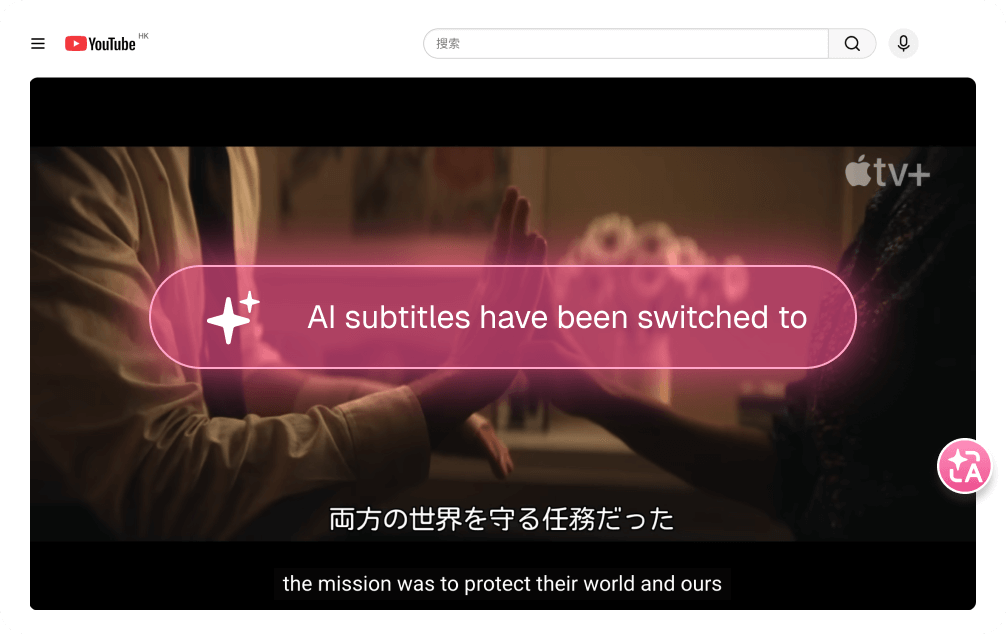
Watch videos with instant bilingual subtitles appearing simultaneously during playback, eliminating waiting time for subtitle file processing or transcription completion.

Bilingual Display

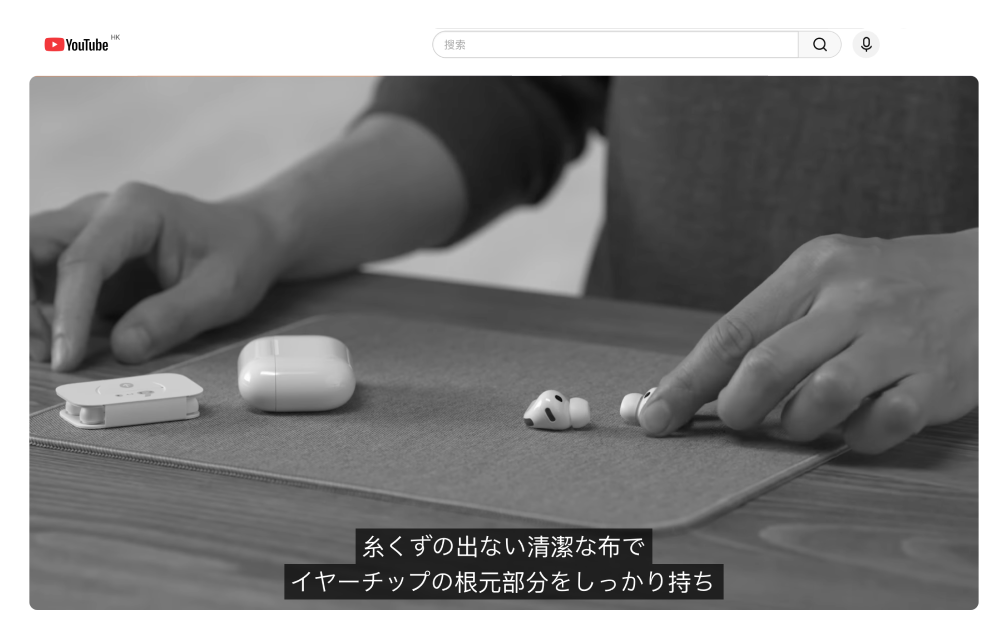
See original and translated subtitles side-by-side, preserving linguistic context while understanding meaning—perfect for language learners and content comprehension.


Bilingual Display
Platform Coverage
Platform Coverage

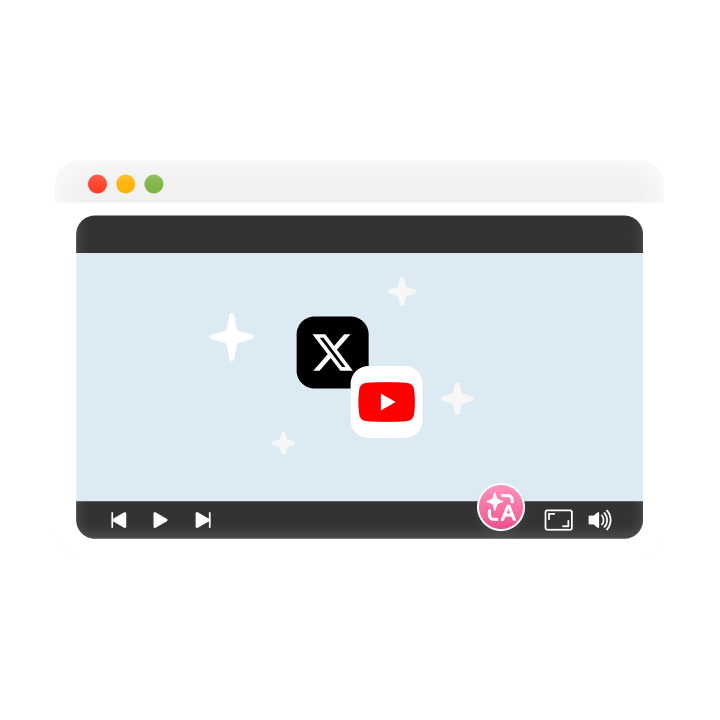
Access consistent subtitle translation across YouTube, Netflix, Coursera, and 60+ video platforms through browser extension or direct link input.

AI Generation

Automatically generate subtitles for videos without captions using AI speech recognition, then translate them into your target language instantly.

AI Generation
Subtitle Export
Subtitle Export

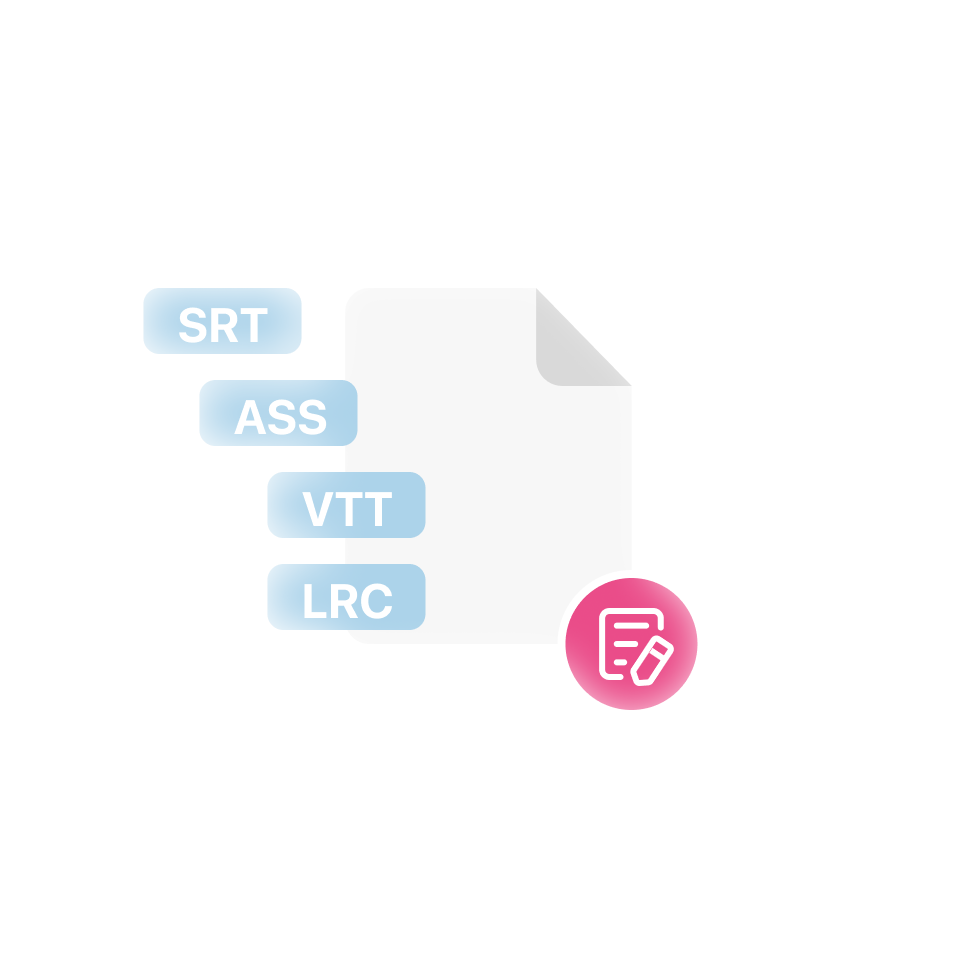
Edit translated subtitles and export bilingual files in SRT or ASS formats for content repurposing, study notes, or localization projects.

Multi-Engine Support

Choose from 20+ translation engines including ChatGPT, DeepL, and Google Translate, ensuring accurate context-aware translations across 100+ language pairs.

Multi-Engine Support

Supported categories

Streaming Services
Video Sharing
Online Education
Social Networking
News & Information
Creator Platforms
Developer & Technology Platforms

Frequently Asked Questions About Video Subtitle Translators

Can a video subtitle translator work on videos without existing subtitles?
Yes, advanced video subtitle translators like Immersive Translate can handle videos that lack subtitles entirely. When you encounter a YouTube video without captions or closed captions, Immersive Translate's AI subtitle generation feature automatically detects the spoken audio and creates subtitles from scratch. Once these subtitles are generated, the system immediately translates them into your target language, displaying both the original and translated text side by side. This capability is particularly valuable for content creators repurposing foreign-language material, language learners studying authentic content, or professionals accessing specialized videos that haven't been captioned yet. The AI-powered speech recognition works across multiple languages, though accuracy depends on audio quality and speaker clarity. This two-step process—first generating subtitles, then translating them—means you can access content that would otherwise remain completely inaccessible due to language barriers, without needing separate transcription tools or manual subtitle creation.
How does real-time video subtitle translation differ from downloading and translating subtitle files separately?
Real-time video subtitle translation fundamentally changes how you consume foreign-language content by integrating translation directly into your viewing experience. With Immersive Translate's browser extension, you can watch videos on over 60 platforms while bilingual subtitles appear automatically during playback—no need to pause, download subtitle files, run them through a separate translator, and then try to sync them back to the video. This simultaneous translation approach means you understand content as it unfolds, maintaining the natural flow and emotional impact of the original material. The bilingual display shows both the original language and your translation side by side, which is invaluable for language learners who want to compare phrasing, pick up vocabulary in context, and improve listening comprehension. For professionals attending international webinars or students watching foreign university lectures, this real-time capability eliminates the workflow disruption of traditional subtitle translation methods. You're not forced into a 'process first, watch later' cycle—instead, comprehension happens in the moment, making video subtitle translators like Immersive Translate far more practical for daily use across educational content, entertainment, and professional development scenarios.
Which translation engines provide the most accurate results for video subtitle translation, and can I switch between them?
The accuracy of video subtitle translation varies significantly depending on the language pair, content type, and specific terminology involved, which is why Immersive Translate integrates over 20 premium translation engines rather than locking you into a single service. You can choose from ChatGPT and OpenAI models for context-aware, natural-sounding translations that handle idioms well; DeepL for European languages where it excels at nuance and tone; Google Translate for broad language coverage including less common pairs; DeepSeek for technical content; and Microsoft Translate for business terminology. The ability to switch between these engines mid-video is a game-changer—if you're watching a Japanese anime and find one translator handles cultural references better, you can instantly switch without restarting. For technical tutorials or academic lectures, you might prefer ChatGPT's ability to maintain context across longer passages, while entertainment content might work better with DeepL's natural phrasing. This flexibility means you're not stuck with subpar translations when a particular engine struggles with specialized vocabulary or regional expressions. International students can test different engines on their course videos to find which handles their field's terminology best, while content creators can compare outputs to ensure their repurposed material maintains the original meaning accurately across subtitle translation workflows.
Can I edit translated video subtitles and export them for other uses?
Absolutely—Immersive Translate's video subtitle translator includes comprehensive editing and export capabilities that extend its value far beyond simple viewing. After translating subtitles, you can click into any subtitle segment to edit the translation directly, which is essential for correcting terminology, adjusting tone, or fixing context-specific phrases that automated translation might miss. This editing feature is particularly valuable for content creators who need polished subtitles for their own videos, researchers creating study materials from foreign-language lectures, or businesses localizing training content. Once you've refined the translations to your satisfaction, you can export the bilingual subtitles in standard formats like SRT and ASS files. These exported files can be embedded into your own video projects, shared with team members, uploaded to video platforms, or archived as study notes. For example, international students can translate and export lecture subtitles to create bilingual study guides, while YouTubers can translate competitor content for market research and export the subtitles for reference. The combination of real-time translation, manual refinement, and professional export options means Immersive Translate functions as both an immediate comprehension tool and a complete subtitle localization workflow, eliminating the need for multiple separate applications in your video translation process.
Does video subtitle translation work during live meetings and video conferences?
Yes, Immersive Translate extends its video subtitle translation capabilities to live meetings on Zoom, Google Meet, and Microsoft Teams, addressing one of the most challenging real-world scenarios for cross-language communication. When you enable the feature during a video conference, it leverages each platform's native live caption functionality and overlays bilingual translations in real time, allowing you to follow along as international colleagues speak in their native languages. This is transformative for remote workers in multinational companies who regularly attend meetings where English isn't everyone's first language, or where discussions happen entirely in a foreign language. The bilingual subtitle display means you can see both the original speech and the translation simultaneously, helping you catch nuances and verify understanding even when accents or technical terminology make direct listening difficult. After the meeting concludes, you can export a bilingual transcript of the entire conversation, creating a permanent record that's searchable in both languages. This post-meeting export is invaluable for reviewing action items, sharing meeting notes with team members who couldn't attend, or documenting decisions for compliance purposes. For international students attending virtual office hours or professionals participating in global project calls, this live meeting translation capability removes the anxiety of missing critical information due to language barriers, while the transcript export ensures nothing gets lost in translation after the call ends.
How does bilingual subtitle display help with language learning compared to translation-only subtitles?
Bilingual subtitle display represents a fundamentally different approach to video subtitle translation that's specifically designed to accelerate language acquisition rather than just enabling passive content consumption. When Immersive Translate shows both the original language and your native language side by side, you're constantly exposed to authentic language patterns, vocabulary in context, and natural sentence structures while maintaining full comprehension through the translation. This dual-exposure method allows language learners to actively compare how ideas are expressed across languages—you might notice how a Japanese phrase conveys politeness differently than its English translation, or how French sentence structure differs from your native language. Over time, this comparison builds intuitive understanding of grammar patterns and common expressions without requiring explicit study. The bilingual format also prevents the common pitfall of becoming dependent on translations alone; you're encouraged to glance at the original text first, use the translation for confirmation, and gradually reduce reliance on your native language as comprehension improves. For intermediate learners watching YouTube channels in their target language, this means every video becomes a learning opportunity where entertainment and education merge naturally. Advanced learners can use the bilingual subtitles to pick up colloquialisms, slang, and cultural references that traditional textbooks miss, while beginners gain confidence by understanding content that would otherwise be completely inaccessible. This approach transforms any video with subtitle translation into an immersive learning environment that's far more engaging and effective than translation-only options that separate you from the original language entirely.
What's the difference between web-based video subtitle translation and browser extension translation?
Immersive Translate offers two distinct approaches to video subtitle translation, each optimized for different use cases and user preferences. The web-based translator works by pasting a YouTube or X (formerly Twitter) video link directly into the Immersive Translate website, where the system fetches or generates subtitles, translates them, and plays the video with bilingual captions—all without requiring any software installation. This method is perfect for quick translations when you're on a device where you can't install extensions, when you want to share a translated video link with colleagues or classmates, or when you're working with individual videos rather than browsing multiple platforms. The browser extension approach, by contrast, integrates directly into your Chrome, Edge, or Firefox browser and activates automatically across over 60 video platforms as you browse normally. When you visit Netflix, Coursera, or any supported site, the extension detects video content and overlays bilingual subtitles in real time without leaving the page or disrupting your workflow. This seamless integration is ideal for users who regularly consume foreign-language content across multiple platforms—international students watching lecture series, entertainment fans binge-watching foreign dramas, or professionals following industry channels. The extension remembers your preferences, translation engine choices, and subtitle styling across sessions, creating a consistent experience. Both methods access the same powerful translation engines and AI subtitle generation capabilities, so the choice comes down to your usage pattern: web-based for occasional, link-specific translations, or extension-based for integrated, continuous subtitle translation across your daily video consumption habits.