














immersive translate logoImmersive Translate
English
google
openAI
Gemini
DeepL
Microsoft
Tencent Smart
Volctrans
Youdao
DeepSeek
Baidu
Niu
Caiyun
Tencent
OpenL
BigModel
SiliconFlow
google
openAI
Gemini
DeepL
Microsoft
Tencent Smart
Volctrans
Youdao
DeepSeek
Baidu
Niu
Caiyun
Tencent
OpenL
BigModel
SiliconFlow
google
openAI
Gemini
DeepL
Microsoft
Tencent Smart
Volctrans
Youdao
DeepSeek
Baidu
Niu
Caiyun
Tencent
OpenL
BigModel
SiliconFlow

Video translation demo

Three.js Journey Course Translator That Works
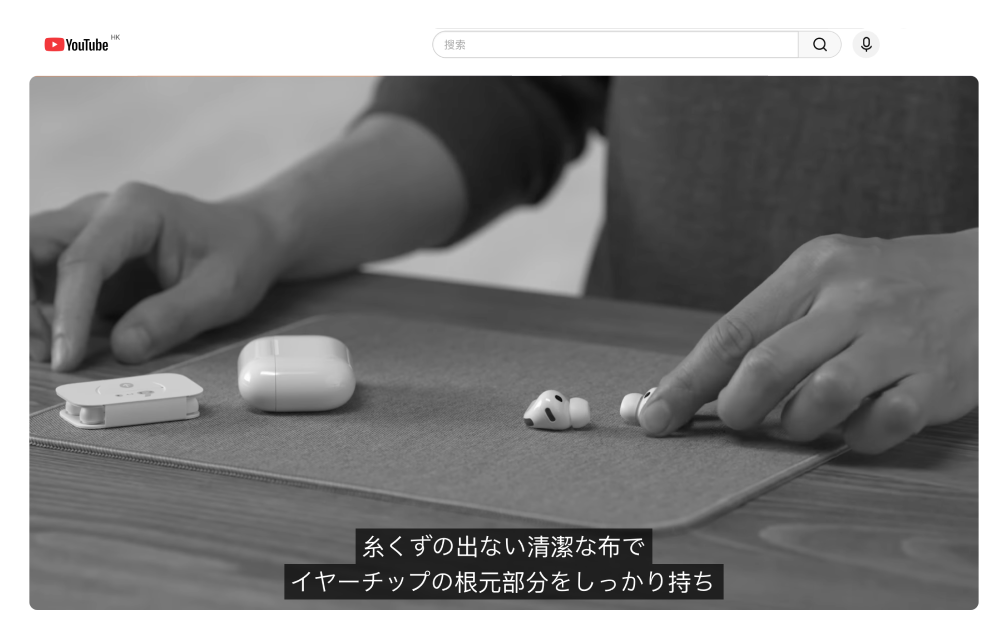
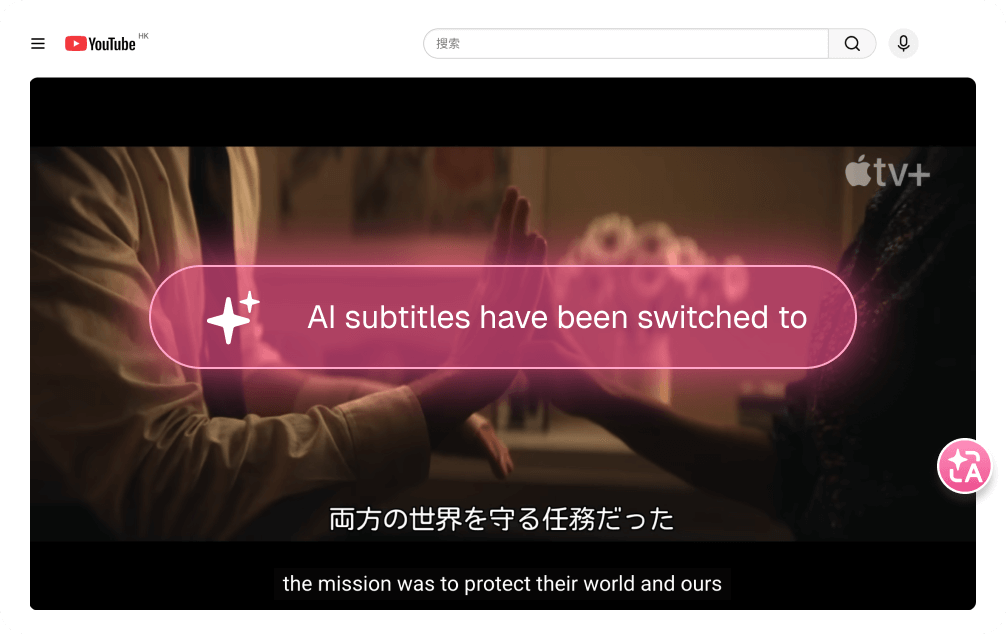
Learning Three.js requires understanding complex technical concepts in real-time. Immersive Translate's video translator displays bilingual subtitles side-by-side during playback, letting you grasp 3D graphics terminology while following Bruno Simon's tutorials without pausing to look up translations or waiting for processing.
Before
user-pain-points
User Pains
Traditional tools require downloading and re-uploading course videos
Translation-only subtitles lose original technical terminology context
Processing delays interrupt learning flow and momentum
After
happy-emoji
solutions
Immersive Translate Solution
happy-emojiTranslate Three.js Journey directly while watching on platform
happy-emojiBilingual subtitles preserve original technical terms alongside translations
happy-emojiReal-time translation maintains continuous learning without workflow interruption
happy-emojiAI-powered context understanding handles complex 3D graphics terminology accurately

Four steps to enjoy content in your native language

1

Copy & paste video link

2

Click Translate Video and wait a moment

3

Click Play Immediately to view

Master Three.js Journey with Real-Time Translation
Instant Comprehension

Watch Bruno Simon's Three.js Journey lessons while understanding every technical term immediately through side-by-side bilingual subtitles, eliminating the need to pause for translation lookups.

Context-Aware Translation

AI models like ChatGPT and Claude accurately translate complex WebGL terminology and Three.js-specific concepts, ensuring technical accuracy that generic translators miss in coding tutorials.


Context-Aware Translation
Learn While Watching

Absorb Three.js fundamentals without workflow interruption—no downloading, transcribing, or switching tabs—just pure learning with translations appearing exactly when you need them during playback.

Technical Vocabulary Retention

Bilingual display helps developers memorize English programming terms alongside native language explanations, building professional vocabulary essential for reading Three.js documentation and community resources.
Technical Vocabulary Retention
Subtitle Export Capability

Save translated Three.js Journey subtitles as SRT files for offline review, creating personalized study materials to revisit complex shader programming or animation concepts anytime.

Multi-Platform Consistency

Whether accessing Three.js Journey through their official platform or embedded videos, experience identical translation quality across all learning environments with one browser extension installation.
Multi-Platform Consistency

Supported categories

Streaming Services
Video Sharing
Online Education
Social Networking
News & Information
Creator Platforms
Developer & Technology Platforms

Three.js Journey Course Translator: Frequently Asked Questions

How can I translate Three.js Journey course videos while watching them?
You can translate Three.js Journey course videos in real-time using Immersive Translate's video translation feature. Simply install the browser extension and navigate to the course platform. The tool will automatically detect the video and display bilingual subtitles side by side—showing both the original English instruction and your preferred language translation simultaneously. This means you can follow along with Bruno Simon's technical explanations about WebGL, 3D rendering, and shader programming without pausing to look up translations. The AI-powered subtitle system understands the technical context of Three.js terminology, ensuring accurate translations of concepts like geometry, materials, lighting, and animation loops. Unlike downloading transcripts and translating them separately, this approach lets you learn Three.js coding techniques while the instructor demonstrates them on screen.
Does the translator work with all Three.js Journey course modules and lessons?
Yes, Immersive Translate works across the entire Three.js Journey curriculum, from beginner basics to advanced shader programming modules. Whether you're watching lessons on the course's official platform or accessing supplementary YouTube tutorials related to Three.js development, the translation feature functions consistently. The browser extension supports over 60 major video platforms, which covers most places where Three.js educational content appears. For the Three.js Journey course specifically, you can translate lessons covering scene setup, camera controls, particle systems, physics simulations, and post-processing effects. The bilingual subtitle display is particularly valuable when learning complex topics like GLSL shaders or performance optimization, where understanding precise technical language makes a significant difference in your learning outcomes.
Can I translate Three.js Journey course documentation and code examples alongside videos?
Absolutely. Beyond video translation, Immersive Translate offers comprehensive webpage translation that works perfectly with the Three.js Journey course documentation, code repositories, and lesson notes. When you're reading through written explanations of 3D concepts, shader code comments, or troubleshooting guides, you can activate the bilingual parallel translation mode. This displays the original English text alongside your language translation in a side-by-side format, which is especially helpful when learning programming terminology. You can hover over specific technical terms like 'raycasting,' 'buffer geometry,' or 'render targets' to see instant translations. The tool also supports PDF translation if you've downloaded course materials or supplementary Three.js documentation. This multi-format translation capability means you can maintain a consistent learning experience whether you're watching video tutorials, reading documentation, or reviewing code examples.
Which translation engines work best for technical Three.js course content?
Immersive Translate integrates multiple AI models and translation engines, giving you flexibility to choose what works best for Three.js technical content. For highly technical lessons involving WebGL programming, shader mathematics, or 3D graphics theory, AI models like ChatGPT, Claude, or Gemini often provide superior context-aware translations compared to traditional machine translation. These models understand the relationship between technical terms and can maintain consistency when translating repeated concepts throughout a course module. For example, when translating lessons about 'normal mapping' or 'ambient occlusion,' AI models recognize these as specific 3D graphics techniques rather than translating them literally. You can switch between different translation services directly within the extension based on your needs—using AI models for complex theoretical explanations and faster traditional engines for simpler instructional content. This flexibility ensures you get accurate translations whether you're learning basic Three.js scene setup or advanced custom shader development.
Can I save and review translated Three.js course subtitles for later study?
Yes, Immersive Translate allows you to edit and export translated subtitles in SRT format, which is incredibly useful for Three.js course review and note-taking. After watching a lesson on topics like particle systems or physics integration, you can export both the original and translated subtitle files. This creates a permanent bilingual reference document you can review when implementing similar techniques in your own projects. Many learners use these exported subtitles to create personal study guides, extracting key technical explanations about Three.js methods, properties, and best practices. You can also edit the translations before exporting if you want to refine technical terminology or add your own annotations. This feature transforms passive video watching into an active learning resource, giving you searchable text references for complex topics like custom geometry creation, texture mapping workflows, or animation timing functions that you can consult while coding.
How does bilingual subtitle display help when learning Three.js programming concepts?
The bilingual subtitle feature is particularly powerful for learning Three.js because it lets you see technical terminology in both languages simultaneously. When Bruno Simon explains concepts like 'orthographic cameras,' 'directional lights,' or 'mesh standard materials,' you see the English term alongside your language translation. This dual exposure helps you build a mental connection between the technical vocabulary and the concepts, which is essential when you later read English-language Three.js documentation, Stack Overflow discussions, or GitHub repositories. Many international developers find that understanding the original English terminology while learning in their native language accelerates their ability to work with the Three.js ecosystem, where most resources, community discussions, and official documentation are in English. The side-by-side display also helps you catch nuances in instruction—for instance, understanding the difference between 'scene.add()' method explanations and general scene management concepts. This approach supports both immediate comprehension and long-term professional development in the Three.js and WebGL development community.
Is there a way to translate Three.js Journey course content on mobile devices?
Yes, Immersive Translate supports mobile platforms, allowing you to continue your Three.js learning on smartphones or tablets. While the full browser extension experience works best on desktop for coding along with tutorials, the mobile version lets you watch translated Three.js Journey videos during commutes or downtime. You can paste YouTube links or course video URLs into the web-based translation interface to generate bilingual subtitles for mobile viewing. This is particularly useful for reviewing theoretical concepts like lighting models, camera mathematics, or rendering pipelines when you're away from your development environment. The mobile support means your Three.js education doesn't have to stop when you're not at your computer—you can watch translated lessons about animation techniques, shader fundamentals, or optimization strategies anywhere. For hands-on coding lessons, many learners use mobile translation to preview content, then return to desktop with the browser extension for the practical implementation phase, creating a flexible learning workflow that fits different contexts and schedules.