














immersive translate logoImmersive Translate
English
google
openAI
Gemini
DeepL
Microsoft
Tencent Smart
Volctrans
Youdao
DeepSeek
Baidu
Niu
Caiyun
Tencent
OpenL
BigModel
SiliconFlow
google
openAI
Gemini
DeepL
Microsoft
Tencent Smart
Volctrans
Youdao
DeepSeek
Baidu
Niu
Caiyun
Tencent
OpenL
BigModel
SiliconFlow
google
openAI
Gemini
DeepL
Microsoft
Tencent Smart
Volctrans
Youdao
DeepSeek
Baidu
Niu
Caiyun
Tencent
OpenL
BigModel
SiliconFlow

Video translation demo

Best PBS Video Translator for Learning
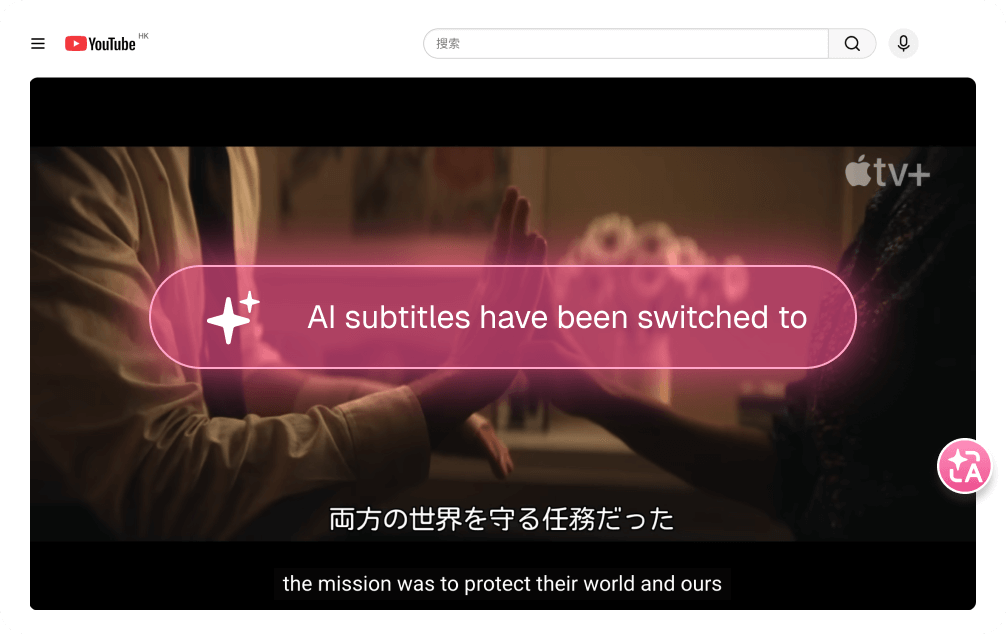
Immersive Translate transforms PBS documentaries and educational content into bilingual learning experiences. Unlike traditional tools requiring download-translate-rewatch workflows, it displays side-by-side subtitles during playback, letting you understand complex topics while preserving original narration context—perfect for students, educators, and lifelong learners exploring PBS's rich content library.
Before
user-pain-points
User Pains
Traditional tools force you to process videos before watching
Losing original context when viewing translated-only subtitles
No real-time translation during PBS documentary playback
After
happy-emoji
solutions
Immersive Translate Solution
happy-emojiInstant bilingual subtitles appear while PBS videos play
happy-emojiOriginal and translated text side-by-side preserves educational context
happy-emojiAI-powered subtitle generation when PBS videos lack captions
happy-emojiBrowser extension works directly on PBS without uploading files

Four steps to enjoy content in your native language

1

Copy & paste video link

2

Click Translate Video and wait a moment

3

Click Play Immediately to view

PBS Video Translator That Transforms Learning

Real-Time Understanding

Watch PBS documentaries with instant bilingual subtitles appearing simultaneously, eliminating the need to pause or switch between translation tools while exploring nature, history, and science content.

Educational Context

AI models like ChatGPT and Claude analyze PBS educational terminology, delivering context-aware translations that preserve scientific accuracy and cultural nuances in documentary narration and interviews.


Educational Context
Side-by-Side Learning

Original English subtitles display alongside translations, helping language learners absorb PBS vocabulary while understanding complex topics from NOVA, Frontline, and Nature programs effortlessly.

Browser Integration

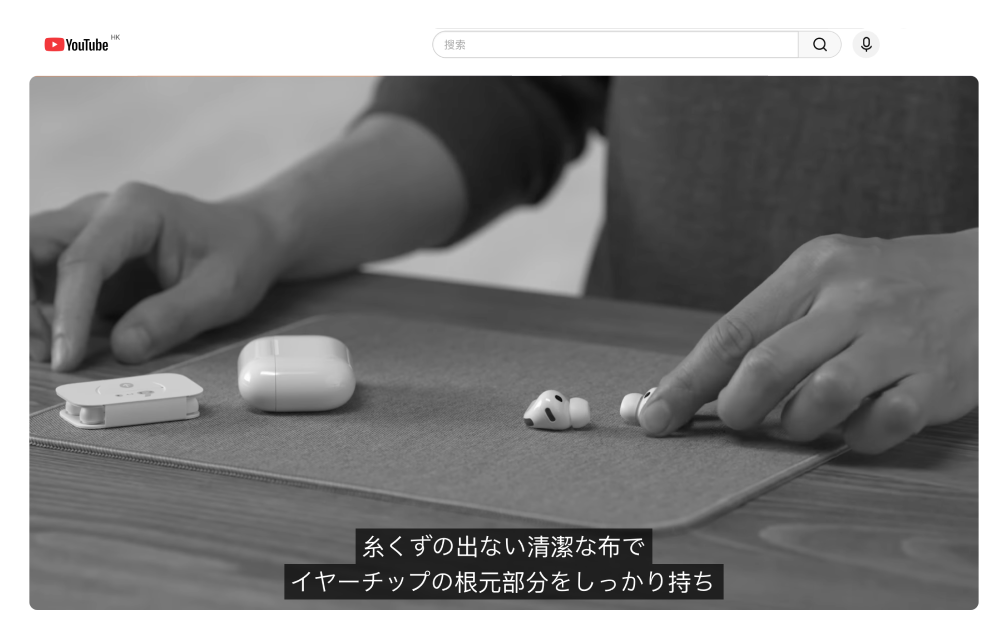
Translate PBS videos directly on the official website through browser extension, maintaining your viewing flow without copying links or leaving the platform for separate translation processing.

Browser Integration
Subtitle Customization

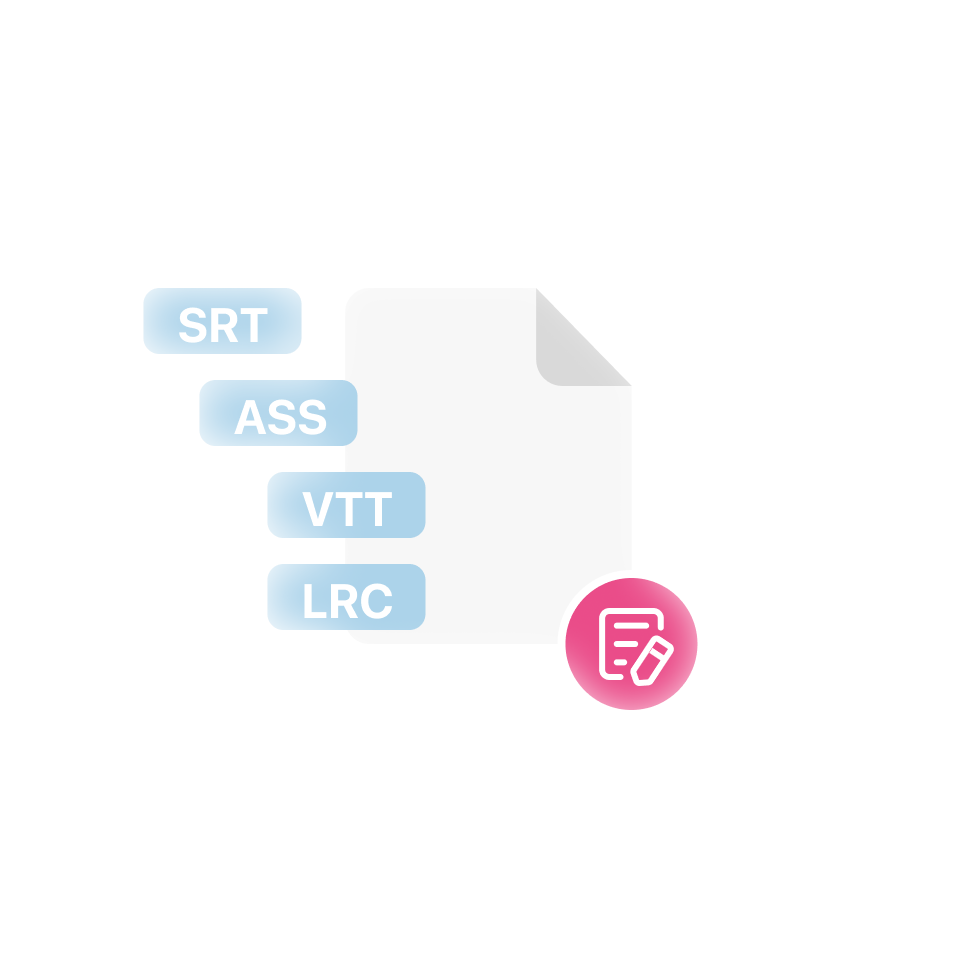
Edit, export, and save PBS documentary subtitles in SRT format for study notes, classroom materials, or personal reference, turning educational content into reusable learning resources.

Multi-Platform Access

Access PBS content translation across devices and platforms, whether watching on desktop browsers or mobile, ensuring consistent bilingual subtitle support for continuous educational exploration.
Multi-Platform Access

Supported categories

Streaming Services
Video Sharing
Online Education
Social Networking
News & Information
Creator Platforms
Developer & Technology Platforms

Frequently Asked Questions About PBS Video Translation

How can I translate PBS documentaries and educational videos in real-time while watching?
Immersive Translate offers a seamless solution for translating PBS content directly during playback. Instead of downloading videos or waiting for separate transcription processes, you can use the browser extension to display bilingual subtitles side-by-side as you watch. This works across PBS.org and PBS-affiliated platforms, automatically detecting available captions or generating AI-powered subtitles when none exist. The real-time translation preserves your viewing flow, allowing you to understand complex documentary narration, educational content, or interview segments without interrupting the experience. For PBS videos shared on YouTube or embedded on news sites, you can also paste the video link into Immersive Translate's web-based translator to access the same bilingual subtitle functionality. This approach is particularly valuable for PBS's in-depth journalism and science programming, where context and nuance matter significantly.
Can I translate PBS NewsHour and other PBS news programs with accurate context?
Yes, Immersive Translate specializes in context-aware translation that goes beyond basic word-for-word conversion. For PBS NewsHour, Washington Week, and Frontline documentaries, the AI translation models understand journalistic terminology, political context, and subject-specific vocabulary. The system supports multiple advanced AI models including ChatGPT, Claude, Gemini, and DeepSeek, which can handle the sophisticated language used in PBS news analysis and investigative reporting. When translating PBS current affairs content, you'll see both the original English subtitles and translated versions simultaneously, helping you verify accuracy and learn professional terminology in your target language. This is especially useful for international viewers trying to understand American politics, policy discussions, or complex news stories that require cultural context. The bilingual display ensures you never lose the original meaning while gaining comprehension in your preferred language.
What's the best way to translate PBS educational videos for students and language learners?
For educational PBS content like NOVA science documentaries, American Experience history programs, or Nature episodes, Immersive Translate provides a learning-optimized translation experience. The side-by-side bilingual subtitle format is specifically designed for language acquisition and comprehension. Students can watch PBS educational videos while simultaneously seeing original English narration and translations, which reinforces vocabulary learning and improves listening skills. You can customize subtitle appearance, adjust playback speed, and even edit translations if you notice terminology that could be more precise for your learning goals. The subtitle export feature allows you to save translated captions as SRT files, creating study materials for classroom use or personal review. This is particularly valuable for ESL students using PBS LearningMedia content, international students studying American history or science, or educators preparing multilingual lesson materials. The translation quality maintains the educational integrity of PBS programming while making it accessible across language barriers.
Does PBS video translation work on PBS Passport and PBS streaming platforms?
Immersive Translate's browser extension functions across PBS's digital ecosystem, including PBS.org video players and content accessed through PBS Passport subscriptions. When you're watching exclusive PBS content, member-only documentaries, or full-length programs through PBS Passport, the extension detects the video player and applies bilingual subtitle translation automatically. This works whether you're streaming on desktop browsers or accessing PBS content embedded on partner websites. For PBS videos that don't have built-in captions, Immersive Translate can generate accurate subtitles using AI speech recognition before translating them. This ensures that even older PBS archival content or programs without official closed captions become accessible in multiple languages. The translation persists across different PBS series and formats, from short news clips to feature-length documentaries, maintaining consistent quality regardless of video length or subject matter. This comprehensive coverage makes Immersive Translate ideal for PBS members who want to explore the full catalog without language limitations.
Can I translate PBS videos into languages other than Spanish or French?
Absolutely. While many PBS programs offer Spanish or French subtitles natively, Immersive Translate supports translation into over 100 languages, dramatically expanding accessibility. Whether you need PBS documentaries translated into Mandarin Chinese, Arabic, Hindi, Portuguese, Japanese, Korean, or dozens of other languages, the platform delivers high-quality results. This is particularly valuable for immigrant communities, international researchers, or global educators who want to use PBS's authoritative content in their native languages. The AI translation models understand idiomatic expressions, cultural references, and specialized terminology across language pairs, ensuring that PBS's storytelling quality translates effectively. You can switch between different target languages instantly, making it easy to compare translations or use PBS content for multilingual education. For less common language pairs, the advanced AI models still maintain contextual accuracy, handling everything from PBS science programming's technical vocabulary to the nuanced language of historical documentaries. This universal language support transforms PBS from primarily English-language content into a truly global educational resource.
How do I save and reuse translated subtitles from PBS documentaries?
Immersive Translate includes powerful subtitle management features that go beyond real-time viewing. After translating a PBS documentary, you can export the bilingual subtitles in standard SRT format, creating permanent files for future reference, classroom distribution, or content creation. This is especially useful for educators building curriculum around PBS programs, researchers analyzing documentary content, or students creating study guides. The exported subtitles maintain timestamp accuracy and can be edited before export if you want to refine translations for specific terminology or regional language preferences. You can also save favorite PBS video translations within the platform for quick access later, building a personal library of translated educational content. For content creators or educators who want to reference PBS material in presentations or derivative works, having downloadable bilingual subtitles provides valuable source material while respecting copyright through proper attribution. This archival capability transforms temporary viewing assistance into permanent learning resources, maximizing the educational value of PBS programming across language communities.
What makes Immersive Translate better than YouTube's auto-translate for PBS content on YouTube?
While PBS shares some content on YouTube where auto-translate is available, Immersive Translate offers several critical advantages for serious viewers and learners. First, the bilingual side-by-side display shows both original and translated subtitles simultaneously, which YouTube's system doesn't support—you must choose one language or the other. This parallel presentation is essential for language learning, fact-checking translation accuracy, and understanding nuanced terminology in PBS's sophisticated programming. Second, Immersive Translate uses multiple advanced AI models that provide more contextually accurate translations than YouTube's generic system, particularly important for PBS's complex documentary narration, scientific explanations, and political analysis. Third, the platform works consistently across all PBS video sources—not just YouTube but also PBS.org, PBS Passport, and PBS content embedded on news sites—providing unified translation quality regardless of where you encounter PBS programming. Fourth, you gain subtitle editing and export capabilities that YouTube doesn't offer, allowing you to refine translations and create study materials. Finally, Immersive Translate's translation quality is optimized for educational and informational content, understanding the specific vocabulary and context that makes PBS programming valuable, rather than treating all video content generically.