












immersive translate logoImmersive Translate
English
google
openAI
Gemini
DeepL
Microsoft
Tencent Smart
Volctrans
Youdao
DeepSeek
Baidu
Niu
Caiyun
Tencent
OpenL
BigModel
SiliconFlow
google
openAI
Gemini
DeepL
Microsoft
Tencent Smart
Volctrans
Youdao
DeepSeek
Baidu
Niu
Caiyun
Tencent
OpenL
BigModel
SiliconFlow
google
openAI
Gemini
DeepL
Microsoft
Tencent Smart
Volctrans
Youdao
DeepSeek
Baidu
Niu
Caiyun
Tencent
OpenL
BigModel
SiliconFlow

Video translation demo

Osmosis Medical Course Translator Excellence
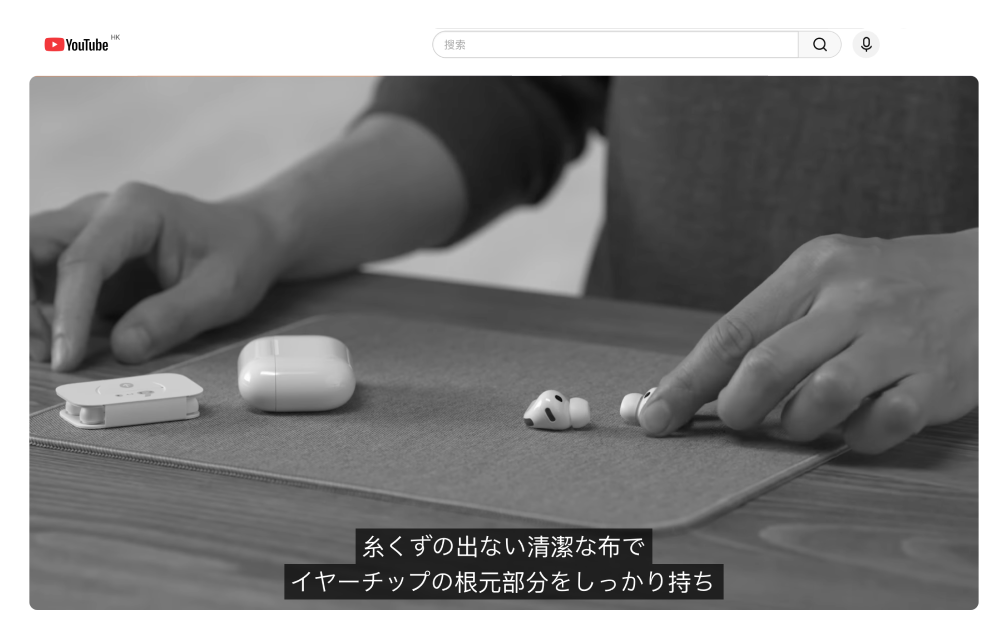
Medical students studying Osmosis courses need precise terminology translation while maintaining original context. Immersive Translate delivers bilingual subtitles with AI-powered medical accuracy across 60+ platforms, enabling simultaneous learning without workflow interruption. Unlike traditional tools requiring download-translate-rewatch cycles, it integrates translation directly into your viewing experience.
Before
user-pain-points
User Pains
Traditional tools require downloading videos before translation begins
Single-language output loses original medical terminology context
Post-processing delays interrupt active learning and comprehension flow
After
happy-emoji
solutions
Immersive Translate Solution
happy-emojiReal-time bilingual subtitles preserve medical terms during playback
happy-emojiAI models ensure context-aware translation of complex medical concepts
happy-emojiInstant understanding without waiting for transcription or processing
happy-emojiSide-by-side display supports vocabulary learning and concept retention

Four steps to enjoy content in your native language

1

Copy & paste video link

2

Click Translate Video and wait a moment

3

Click Play Immediately to view

Osmosis Medical Course Translation Made Simple
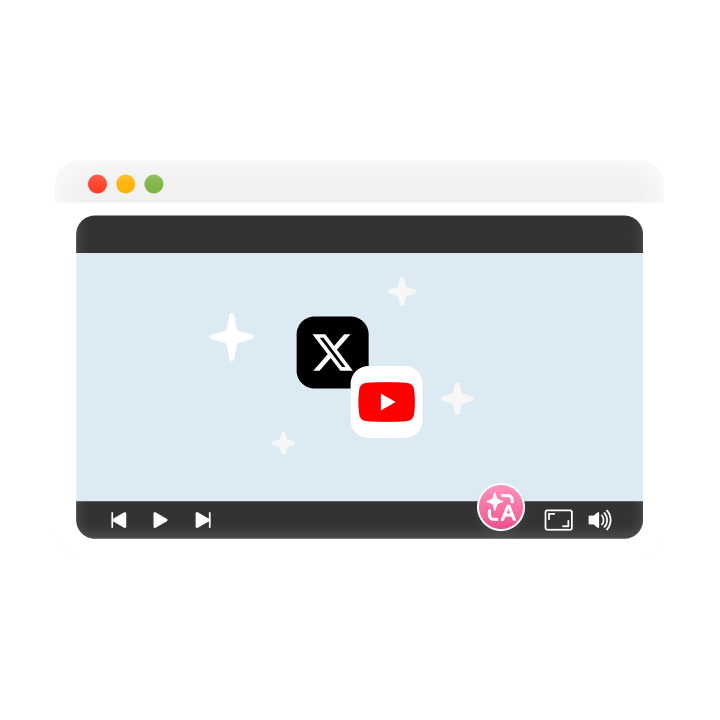
Real-Time Understanding

Watch Osmosis medical lectures while instantly seeing translated subtitles appear alongside original English content, allowing you to grasp complex pathophysiology concepts without pausing or rewinding repeatedly.

Bilingual Learning

Side-by-side original and translated subtitles help medical students master both clinical terminology in English and their native language, essential for international medical licensing exams.


Bilingual Learning
AI-Powered Accuracy
AI-Powered Accuracy

Advanced AI models like ChatGPT and Claude understand medical context, translating specialized terms like pharmacokinetics or immunopathology accurately rather than providing literal word-for-word conversions.

No Upload Required

Simply paste an Osmosis video link or use the browser extension directly on the platform—no downloading files, no waiting for transcription processing, just immediate translation.
No Upload Required
Subtitle Customization

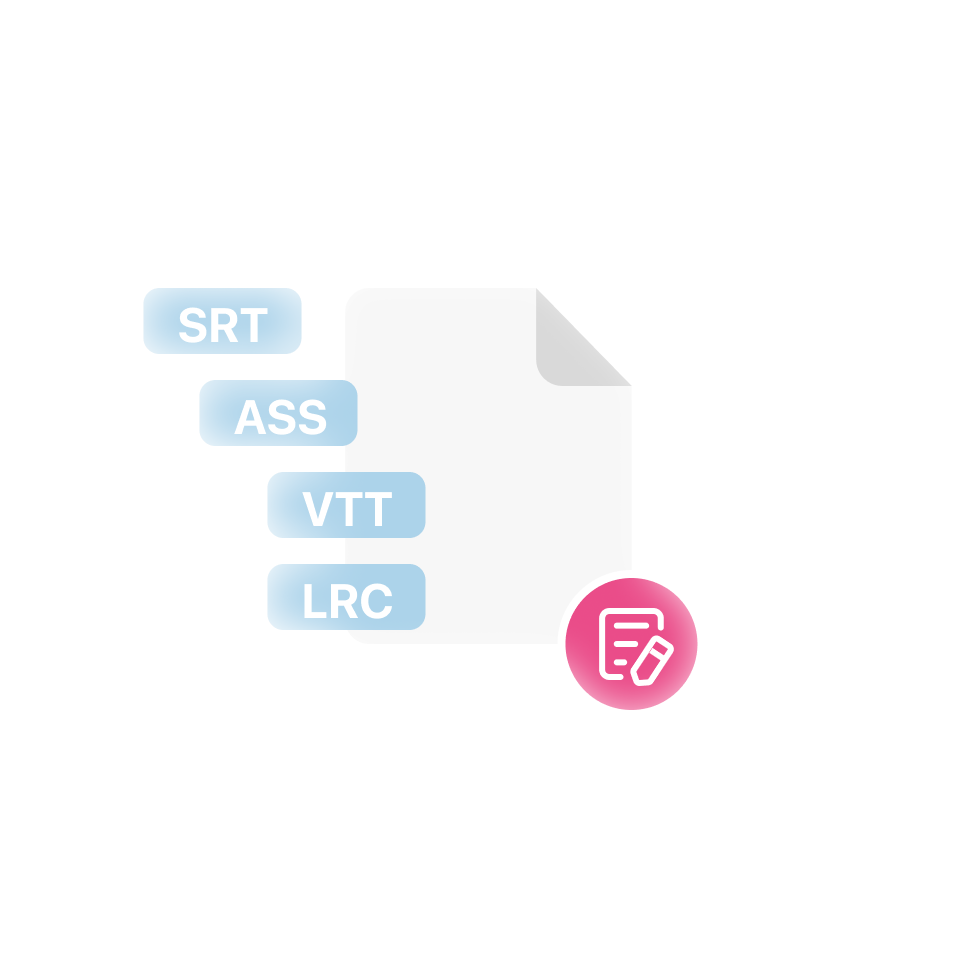
Edit translated medical terminology to match your curriculum, export subtitles for exam preparation, or adjust display settings to focus on anatomy diagrams while reading translations.

Cross-Platform Consistency

Whether accessing Osmosis through YouTube integration or their native platform, Immersive Translate delivers the same bilingual subtitle experience across devices without switching between multiple translation tools.
Cross-Platform Consistency

Supported categories

Streaming Services
Video Sharing
Online Education
Social Networking
News & Information
Creator Platforms
Developer & Technology Platforms

Frequently Asked Questions About Translating Osmosis Medical Courses

Can I translate Osmosis medical videos in real-time while watching them?
Yes, Immersive Translate enables real-time bilingual subtitle translation for Osmosis medical courses directly in your browser. When you're watching complex pathophysiology explanations or clinical case studies on Osmosis, our extension displays both the original English subtitles and your preferred language translation side by side. This simultaneous viewing approach means you don't need to pause the video, copy text to another translator, or wait for processing—you understand medical terminology and concepts as the instructor explains them. The bilingual format is particularly valuable for medical students because you can learn proper English medical vocabulary while ensuring you fully grasp the underlying concepts in your native language. This works across Osmosis's entire video library, from basic anatomy lectures to advanced pharmacology courses.
How does Immersive Translate handle complex medical terminology in Osmosis courses?
Immersive Translate uses advanced AI models including ChatGPT, Claude, and Gemini specifically trained to understand context-aware medical translation. When translating Osmosis medical education content, the system recognizes that terms like 'myocardial infarction,' 'glomerulonephritis,' or 'neurotransmitter pathways' require precise medical accuracy rather than literal word-by-word translation. The AI analyzes the surrounding context—whether the instructor is discussing etiology, pathophysiology, diagnosis, or treatment—to provide translations that maintain clinical accuracy. For instance, when an Osmosis video discusses 'heart failure,' the translation distinguishes between systolic versus diastolic dysfunction based on the lecture context. You can also customize subtitle display settings to show medical terms in both languages simultaneously, which helps you build a bilingual medical vocabulary essential for reading international research papers or communicating with patients from diverse backgrounds.
What if Osmosis videos don't have subtitles—can I still translate them?
Absolutely. One of Immersive Translate's most powerful features is AI-powered subtitle generation for videos without existing captions. When you encounter an Osmosis medical lecture that lacks subtitles—perhaps an older video or a guest lecture—our system automatically generates accurate subtitles using advanced speech recognition technology, then translates them into your chosen language. This is particularly useful for Osmosis content featuring clinical case discussions or patient interviews where automatic captions might not be available. The AI transcription is specifically optimized to recognize medical vocabulary, anatomical terms, and drug names that general transcription services often misinterpret. After generation, you can edit the subtitles if needed and even export them in SRT format for future reference or study group sharing. This means virtually any Osmosis medical course becomes accessible regardless of original subtitle availability.
Can I use Immersive Translate for Osmosis courses on mobile devices?
Yes, Immersive Translate supports mobile translation for Osmosis medical courses, allowing you to study on the go. Whether you're reviewing cardiology lectures during your commute or catching up on immunology videos between clinical rotations, you can access bilingual subtitle translation on your smartphone or tablet. The mobile experience maintains the same side-by-side subtitle display that makes desktop viewing so effective for medical learning. For Osmosis courses accessed through mobile browsers, simply paste the video link into Immersive Translate's web-based translation interface to generate bilingual subtitles. This flexibility is crucial for medical students and healthcare professionals who often study in fragmented time blocks—waiting rooms, hospital cafeterias, or public transportation—where mobile access to translated Osmosis content significantly improves learning efficiency. The translated subtitles remain synchronized with video playback even on smaller screens, ensuring you don't miss critical explanations of disease mechanisms or treatment protocols.
How can I save and review translated Osmosis lecture content for exam preparation?
Immersive Translate offers subtitle editing and export capabilities specifically valuable for medical exam preparation using Osmosis courses. After watching a translated Osmosis video on topics like renal physiology or infectious diseases, you can export both the original and translated subtitles in SRT format. This creates a permanent bilingual study resource that you can review offline, annotate with additional notes, or convert into flashcards for spaced repetition learning. Many medical students use this feature to build comprehensive study guides by combining translated Osmosis subtitles with their own clinical observations and textbook references. You can also edit the AI-generated translations to add personal mnemonics or clarify complex concepts in your own words before exporting. This transforms passive video watching into active learning material creation. The exported subtitle files are searchable, making it easy to quickly locate specific topics like 'diabetic ketoacidosis management' or 'antibiotic resistance mechanisms' when reviewing for USMLE, MCAT, or other medical licensing examinations.
Does Immersive Translate work with other medical education platforms besides Osmosis?
Yes, Immersive Translate supports video translation across 60+ major platforms, making it a comprehensive solution for all your medical education needs beyond just Osmosis. The same bilingual subtitle technology works seamlessly on platforms like Coursera for public health courses, Udemy for clinical skills training, YouTube for surgical technique demonstrations, and even embedded videos on medical journal websites or conference recordings. This means you can maintain a consistent learning experience whether you're watching Osmosis pathology lectures, Khan Academy Medicine anatomy videos, or international medical conference presentations. The browser extension automatically detects video content and applies translation regardless of the platform, eliminating the need to learn different tools for different educational resources. For medical professionals pursuing continuing education or students supplementing Osmosis with diverse learning materials, this cross-platform compatibility ensures language never becomes a barrier to accessing the world's best medical education content, from Harvard Medical School lectures to WHO training modules.
What languages can I translate Osmosis medical courses into, and how do I switch between them?
Immersive Translate supports translation of Osmosis medical courses into over 100 languages through integration with 20+ mainstream translation services including DeepL, Google Translate, and specialized AI models. Whether you need Osmosis content translated into Spanish for Latin American medical students, Mandarin for Chinese healthcare professionals, Arabic for Middle Eastern learners, or any other language, you can easily switch between translation engines to find the one that provides the most accurate medical terminology for your target language. The system allows you to set a default translation language in your browser extension settings, but you can instantly switch languages mid-video if you're studying with international classmates or comparing medical terminology across languages. Some users leverage this multi-language capability to strengthen their medical vocabulary by watching the same Osmosis lecture with translations in two different languages they're learning. The translation service switching feature also lets you compare how different AI models handle complex medical concepts—for instance, you might find that Claude provides more natural-sounding explanations of pathophysiology while ChatGPT excels at pharmacology terminology in your specific language pair.