














immersive translate logoImmersive Translate
English
google
openAI
Gemini
DeepL
Microsoft
Tencent Smart
Volctrans
Youdao
DeepSeek
Baidu
Niu
Caiyun
Tencent
OpenL
BigModel
SiliconFlow
google
openAI
Gemini
DeepL
Microsoft
Tencent Smart
Volctrans
Youdao
DeepSeek
Baidu
Niu
Caiyun
Tencent
OpenL
BigModel
SiliconFlow
google
openAI
Gemini
DeepL
Microsoft
Tencent Smart
Volctrans
Youdao
DeepSeek
Baidu
Niu
Caiyun
Tencent
OpenL
BigModel
SiliconFlow

Video translation demo

Best Coursera Course Translator for Learners
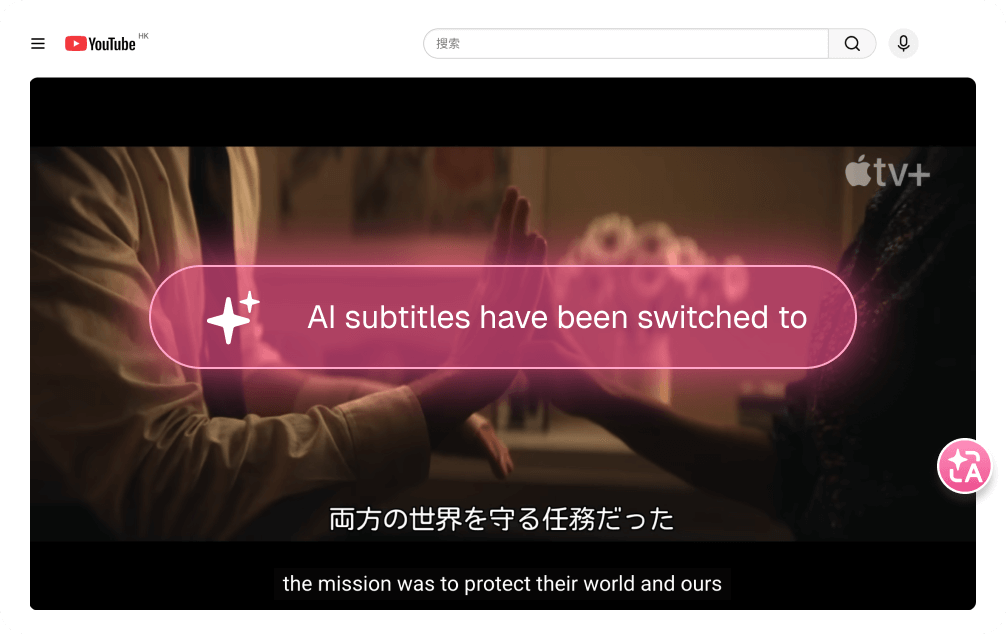
Immersive Translate transforms your Coursera learning experience by delivering real-time bilingual subtitles directly during video playback. Unlike traditional tools requiring download-translate-rewatch workflows, it integrates AI-powered translation into your viewing moment, supporting context-aware understanding across multiple models including ChatGPT and Claude while preserving original language context for deeper comprehension.
Before
user-pain-points
User Pains
Traditional tools force disruptive download-translate-rewatch workflows
Losing original context with translation-only subtitle outputs
Waiting for transcription processing interrupts learning momentum
After
happy-emoji
solutions
Immersive Translate Solution
happy-emojiReal-time bilingual subtitles during Coursera video playback
happy-emojiSide-by-side display preserves original language learning context
happy-emojiAI-powered translation using ChatGPT, Claude, and Gemini models
happy-emojiInstant understanding without waiting for transcription processing

Four steps to enjoy content in your native language

1

Copy & paste video link

2

Click Translate Video and wait a moment

3

Click Play Immediately to view

Coursera Course Translator That Transforms Learning
Real-Time Understanding

Watch Coursera lectures with instant bilingual subtitles appearing side-by-side, eliminating the need to pause, download, or wait for transcription processing to complete.

Context Preservation

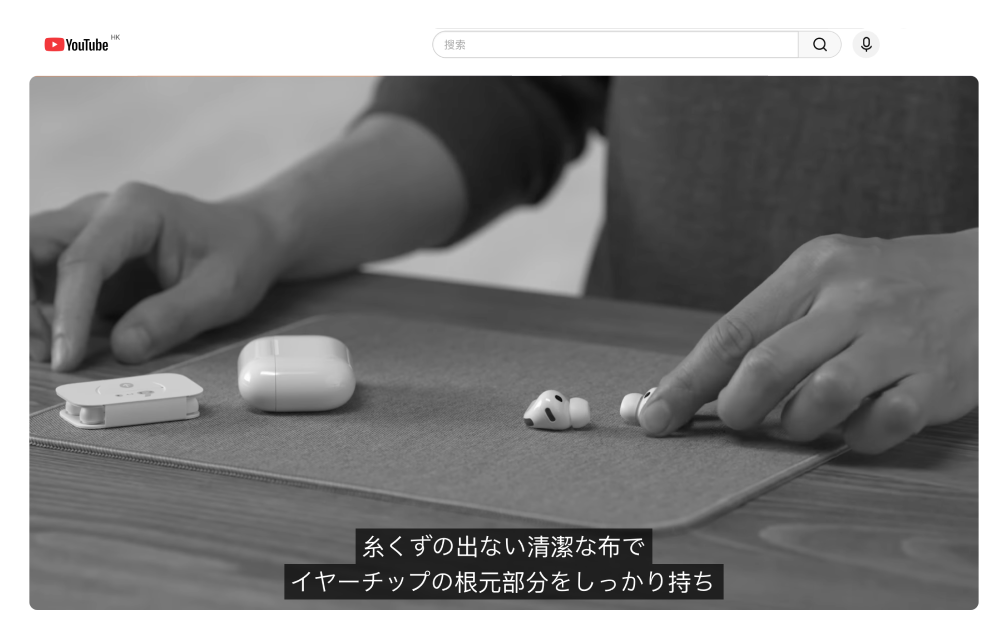
Original and translated subtitles display simultaneously, helping you grasp complex academic concepts while learning subject-specific terminology in both your native language and English.


Context Preservation
Multi-Model AI
Multi-Model AI

Leverage ChatGPT, Claude, Gemini, and DeepSeek models for context-aware subtitle translation that understands academic nuances, technical jargon, and specialized course vocabulary accurately.

Seamless Integration

Our browser extension works directly on Coursera's platform without requiring separate apps, link copying, or workflow interruptions, maintaining your natural learning flow throughout courses.
Seamless Integration
Subtitle Customization

Edit, export, and save translated subtitles in SRT format for review, note-taking, or creating personalized study materials from any Coursera lecture or specialization.

Learning Enhancement

Transform language barriers into learning opportunities by comparing original academic English with translations, accelerating both subject mastery and language acquisition simultaneously during course completion.
Learning Enhancement

Supported categories

Streaming Services
Video Sharing
Online Education
Social Networking
News & Information
Creator Platforms
Developer & Technology Platforms

Frequently Asked Questions About Coursera Course Translation

How can I translate Coursera video lectures in real-time while watching?
With Immersive Translate's browser extension, you can watch Coursera courses with bilingual subtitles displayed side-by-side in real-time. Simply install the extension, navigate to your Coursera course video, and activate the translation feature. The tool automatically detects the video's original subtitles and generates translated captions that appear alongside the English text. This means you're not waiting for transcription or downloading files—you're understanding the lecture as the professor speaks. For courses without existing captions, Immersive Translate uses AI models like ChatGPT and Claude to generate accurate subtitles first, then translates them. This simultaneous viewing and understanding approach is perfect for international students who need to grasp complex concepts in subjects like data science or machine learning without missing a single detail. You can also adjust subtitle display styles, font sizes, and positioning to match your learning preferences, making the Coursera learning experience truly accessible in your native language.
Can I translate Coursera course materials beyond just video subtitles?
Absolutely. While video translation is Immersive Translate's standout feature for Coursera courses, the tool offers comprehensive translation capabilities across all course materials. You can translate entire PDF lecture notes, reading assignments, and downloadable resources with a single click while preserving the original formatting. The bilingual parallel translation feature works seamlessly on Coursera's web pages, allowing you to read course descriptions, assignment instructions, and discussion forums with original and translated text displayed side-by-side. This is particularly valuable when you're working through technical documentation or research papers included in advanced courses. For ebook materials in EPUB or MOBI formats that some Coursera specializations provide, Immersive Translate handles those as well. The tool even translates images and diagrams containing text, which is crucial for courses in fields like engineering or architecture where visual materials carry essential information. This multi-format translation capability means you're not just understanding lectures—you're fully engaging with every aspect of your Coursera learning journey in your preferred language.
Which translation engines work best for translating specialized Coursera courses in fields like computer science or medicine?
Immersive Translate supports over 20 mainstream translation services, and for specialized Coursera content, you'll want to leverage the AI-powered models that understand context and technical terminology. For computer science courses covering topics like algorithms, machine learning, or cloud computing, I've found that ChatGPT and Claude models deliver exceptional accuracy because they're trained on vast technical datasets and can maintain consistency with programming terminology. DeepSeek performs remarkably well for mathematics and data science courses, handling complex equations and statistical concepts with precision. For medical and life sciences courses on Coursera, Gemini excels at translating anatomical terms, pharmaceutical names, and clinical terminology accurately. The beauty of Immersive Translate is that you can switch between these translation engines instantly during your study session. If one model's translation of a particular lecture segment feels unclear, simply toggle to another service and compare—this flexibility ensures you're getting the most accurate understanding of specialized content. You can also set different default engines for different course subjects, so your business management courses might use one model while your biology courses use another, optimizing translation quality based on subject matter.
How does Immersive Translate help with language learning while taking Coursera courses?
Immersive Translate transforms your Coursera course into a dual-purpose experience: subject mastery and language acquisition simultaneously. The bilingual subtitle display is the key—you see the professor's original English alongside your native language translation, allowing you to connect vocabulary with meaning in real-time. This is fundamentally different from watching dubbed content or reading only translated text. When studying a Coursera course on digital marketing, for example, you'll encounter terms like 'conversion rate optimization' or 'customer acquisition cost' in both languages, naturally building your professional English vocabulary. The mouse hover translation feature adds another layer: hover over any unfamiliar word in course readings or assignment descriptions to see instant translations without disrupting your workflow. For serious language learners, you can export the translated subtitles in SRT format, creating a personalized study resource that pairs course content with language practice. Many users taking Coursera courses in fields like international business or global health use this approach to simultaneously earn certificates and improve their English proficiency. The input box translation enhancement is also invaluable when you need to participate in course discussion forums or submit assignments—translate your thoughts from your native language to English, ensuring your contributions are clear and professionally written.
Can I use Immersive Translate for Coursera courses offline or download translated content?
While Immersive Translate primarily works during active browsing sessions, it offers several features that support offline learning from Coursera courses. You can export translated subtitles in SRT format, which means after watching a lecture with bilingual subtitles, you can save both the original and translated subtitle files to your device. These files can be reviewed offline, used with downloaded course videos, or imported into note-taking applications for study purposes. For Coursera's downloadable PDF materials, you can translate them using Immersive Translate and then save the translated versions to your computer for offline reference. This is particularly useful when preparing for exams or working on course projects without internet access. However, the real-time video translation feature does require an active internet connection because it processes subtitles through AI translation models. For learners in areas with unreliable connectivity, I recommend using Immersive Translate during your online study sessions to translate and export all materials, then reviewing those saved resources offline. The tool's subtitle editing capability also lets you refine translations before exporting, ensuring your offline study materials are accurate and personalized to your understanding. This workflow bridges the gap between Coursera's online platform and your offline study needs.
How does Immersive Translate compare to Coursera's built-in subtitle translation feature?
Coursera does offer auto-translated subtitles for many courses, but Immersive Translate provides several significant advantages that enhance your learning experience. First, Coursera's native translation typically shows only the translated subtitle, hiding the original English text. Immersive Translate's bilingual display keeps both languages visible simultaneously, which is crucial for understanding context, learning terminology, and catching nuances that single-language subtitles miss. Second, Coursera's translation quality varies and relies on a single translation engine, while Immersive Translate gives you access to multiple AI models including ChatGPT, Claude, Gemini, and DeepSeek. If Coursera's translation of a complex lecture on quantum physics or financial derivatives feels unclear, you can instantly switch to a different translation engine with Immersive Translate and compare results. Third, Immersive Translate works across all Coursera course materials—not just videos. You get consistent translation for course readings, PDF assignments, discussion forums, and even quiz questions, creating a unified learning environment. The subtitle customization options are also far more extensive: adjust positioning, font size, color schemes, and display timing to match your reading speed and visual preferences. For courses where Coursera doesn't provide subtitles at all, Immersive Translate's AI can generate them from scratch and then translate them, opening up courses that would otherwise be inaccessible. Essentially, Immersive Translate transforms Coursera from a platform with basic translation support into a fully personalized, multilingual learning environment.
Is Immersive Translate suitable for translating Coursera courses in multiple languages, and can I switch between them?
Yes, Immersive Translate supports translation into over 100 languages, making it ideal for multilingual learners or those studying courses in various language combinations. You can easily switch your target translation language depending on which Coursera course you're taking or which language you want to practice. For instance, if you're a Spanish speaker taking an English course on artificial intelligence, you can translate to Spanish. Later, when reviewing the same course to improve your French, simply switch the target language to French without any complicated settings. This flexibility is particularly valuable for polyglots or international professionals who work across multiple language markets. The tool remembers your language preferences for different websites, so you can set Coursera to always translate to your primary language while other platforms use different settings. For specialized courses, you might even translate from English to one language for general understanding, then switch to another language to see how technical terms are expressed differently across linguistic contexts. The keyboard shortcuts make language switching instantaneous—no need to navigate through menus while you're in the middle of a lecture. This multi-language capability also supports collaborative learning: if you're studying a Coursera course with peers who speak different languages, each person can use Immersive Translate set to their preferred language, then discuss the content together with shared understanding. The translation service switching feature ensures you're always getting the best quality for your specific language pair, as some AI models perform better for certain language combinations than others.