
















immersive translate logoImmersive Translate
English
google
openAI
Gemini
DeepL
Microsoft
Tencent Smart
Volctrans
Youdao
DeepSeek
Baidu
Niu
Caiyun
Tencent
OpenL
BigModel
SiliconFlow
google
openAI
Gemini
DeepL
Microsoft
Tencent Smart
Volctrans
Youdao
DeepSeek
Baidu
Niu
Caiyun
Tencent
OpenL
BigModel
SiliconFlow
google
openAI
Gemini
DeepL
Microsoft
Tencent Smart
Volctrans
Youdao
DeepSeek
Baidu
Niu
Caiyun
Tencent
OpenL
BigModel
SiliconFlow

Video translation demo

Why Choose This AI Video Translator
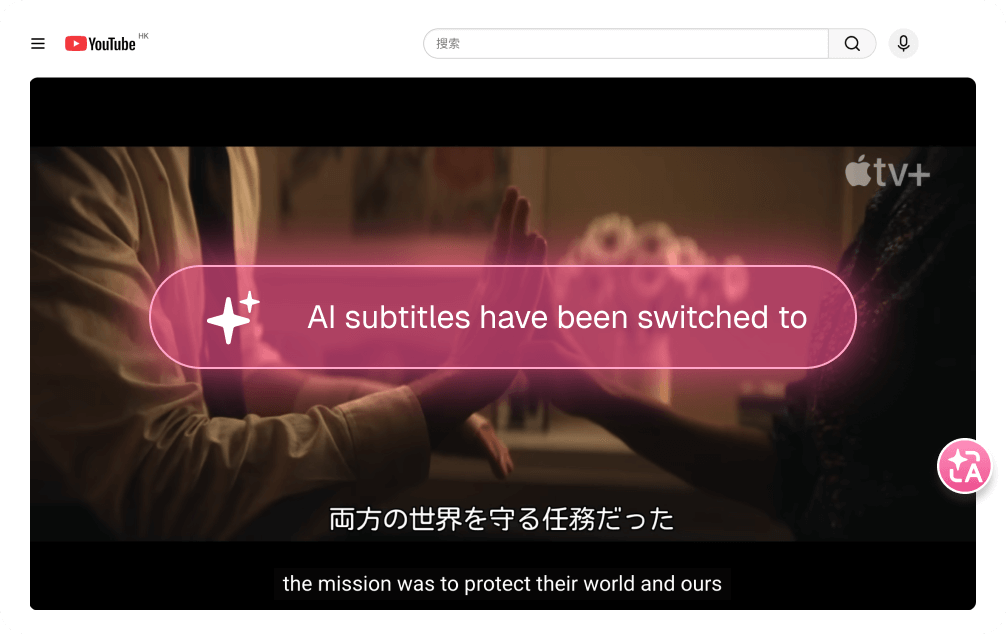
Most AI video translators force you to wait through processing before understanding content. Immersive Translate breaks this pattern by embedding real-time bilingual subtitles directly into your viewing experience across 60+ platforms, letting you comprehend foreign-language videos instantly while preserving original context for deeper learning.
Before
user-pain-points
User Pains
Traditional tools require uploading and waiting for transcription
Translation-only output loses original language context completely
Platform limitations force switching between multiple translation services
After
happy-emoji
solutions
Immersive Translate Solution
happy-emojiUnderstand while watching with real-time bilingual subtitle translation
happy-emojiSide-by-side subtitles preserve original text for language learning context
happy-emojiOne extension works seamlessly across YouTube, Netflix, and 60+ platforms
happy-emojiAI generates subtitles for videos without captions, then translates instantly

Four steps to enjoy content in your native language

1

Copy & paste video link

2

Click Translate Video and wait a moment

3

Click Play Immediately to view

Why Choose Our AI Video Translator

Real-Time Translation

Watch and understand simultaneously as our AI video translator displays original and translated subtitles side-by-side during playback, eliminating waiting time for transcription processing across YouTube, Netflix, and major platforms.

Bilingual Subtitles

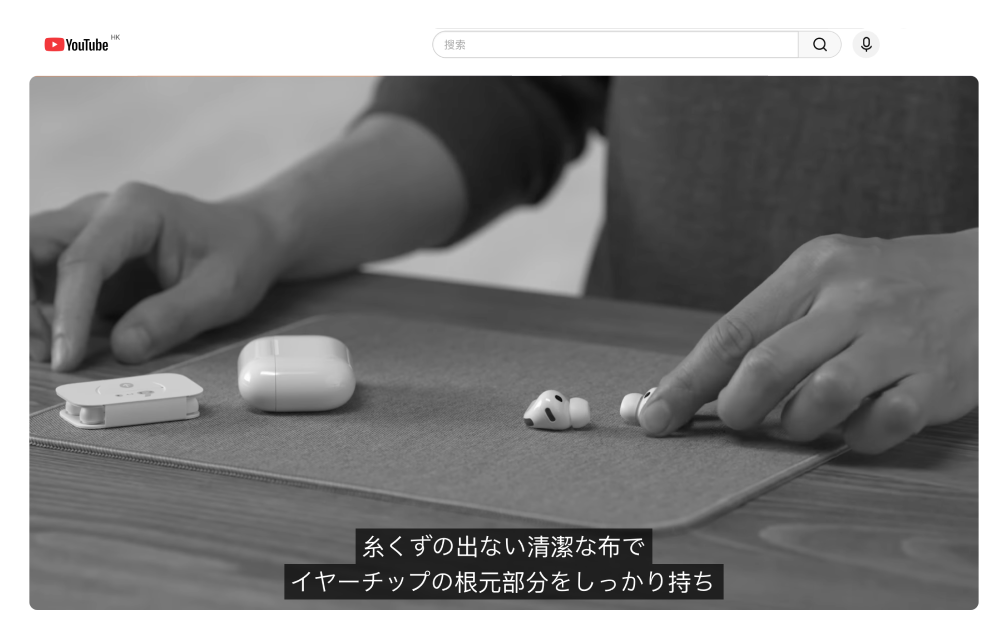
Preserve linguistic context while grasping meaning through parallel subtitle display, ideal for language learners comparing original text and professionals verifying translation accuracy in real-time video consumption.


Bilingual Subtitles
Universal Platform
Universal Platform

One solution works seamlessly across streaming services, online courses, social media videos, and news sites via browser extension or link input, delivering consistent multilingual subtitle translation experience.

AI Generation

Automatically detect speech and generate subtitles for videos without captions, then translate into 100+ languages using advanced AI models like ChatGPT, DeepL, and Gemini for complete accessibility.

AI Generation
Customizable Display

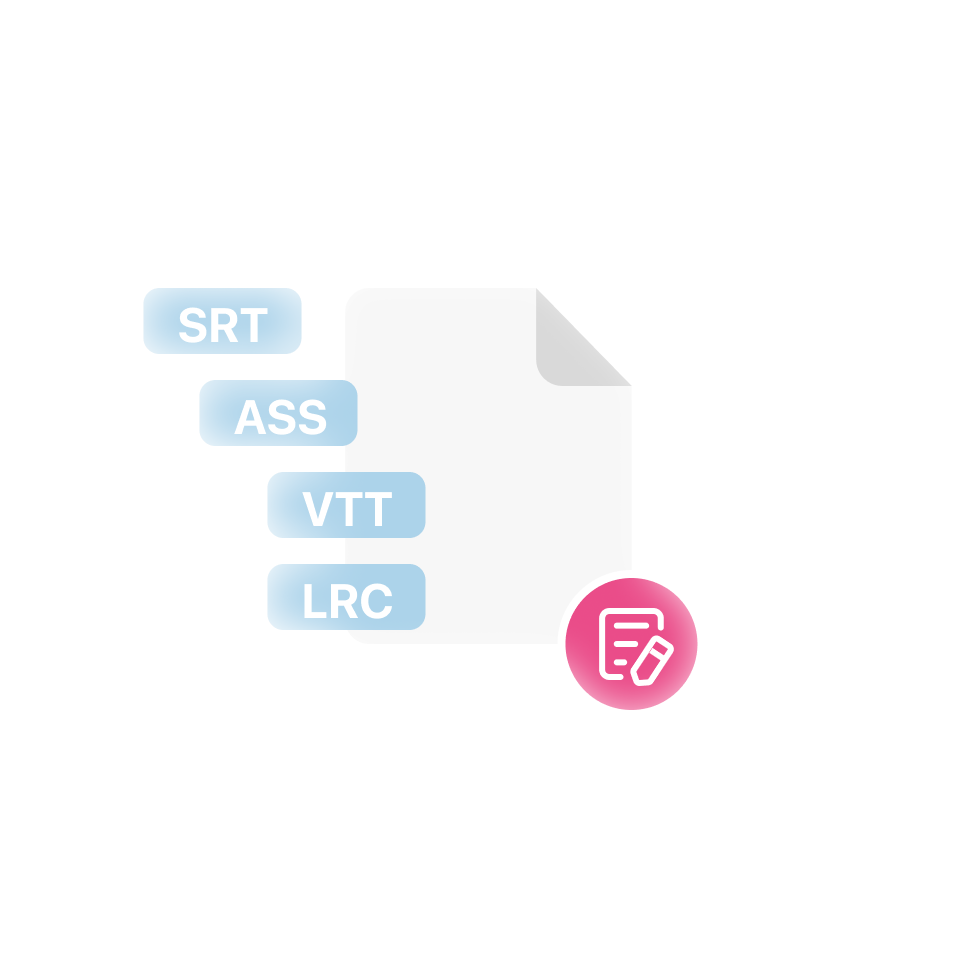
Adjust subtitle font size, color, background opacity, and screen position to match your viewing preferences and ensure optimal readability across different devices and lighting conditions for comfortable consumption.

Export Flexibility

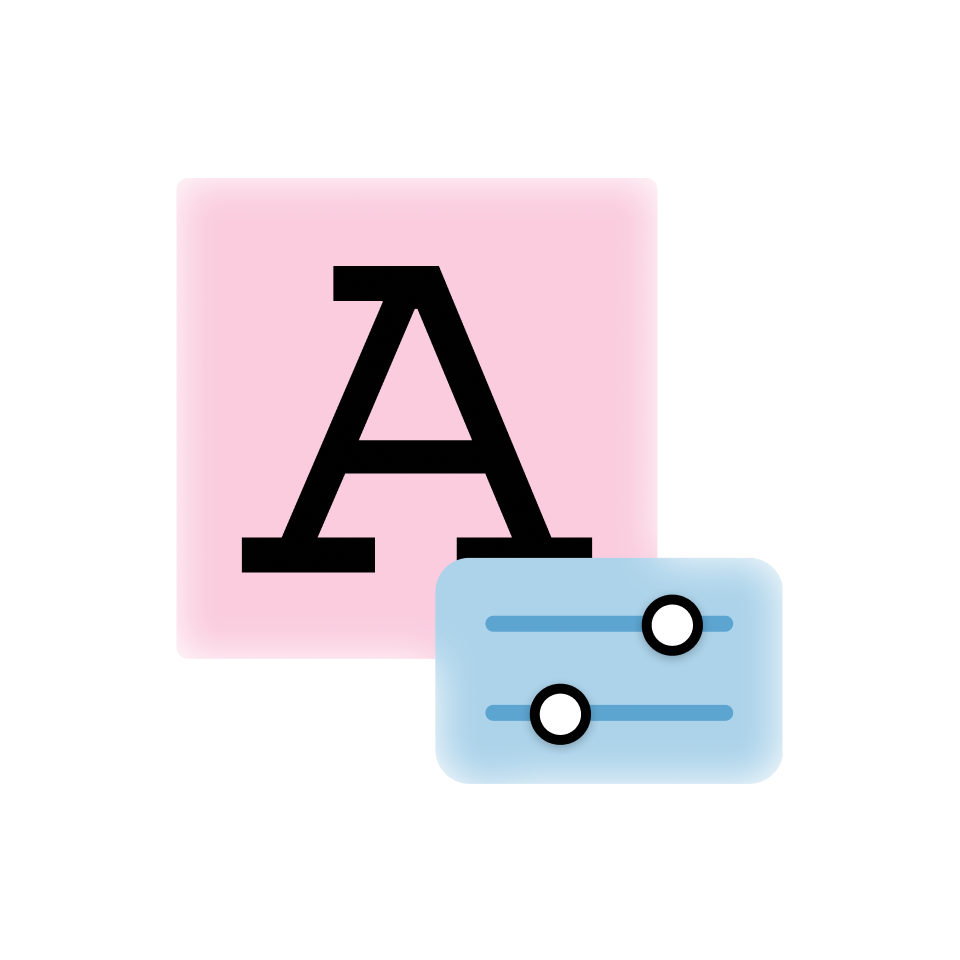
Edit translated subtitles for accuracy refinement and export bilingual files in SRT or ASS formats, perfect for content creators repurposing material, students creating study notes, or localization projects.
Export Flexibility

Supported categories

Streaming Services
Video Sharing
Online Education
Social Networking
News & Information
Creator Platforms
Developer & Technology Platforms

Frequently Asked Questions About AI Video Translators

Can AI video translators handle videos without existing subtitles?
Yes, advanced AI video translation tools like Immersive Translate can process videos that lack subtitles entirely. When you encounter a YouTube video without captions, Immersive Translate's AI subtitle generation feature automatically detects the spoken audio and creates accurate subtitles from scratch. This speech-to-text capability works across multiple languages, converting spoken content into readable text that can then be translated into your target language. The system displays both the original generated subtitles and the translated version side-by-side, allowing you to follow along seamlessly. This is particularly valuable for educational content, conference recordings, or international news videos that often lack proper captioning. The AI-powered transcription technology analyzes audio quality, speaker accents, and contextual clues to produce reliable subtitles, making previously inaccessible foreign-language content fully understandable without manual transcription work.
How does real-time video translation differ from traditional subtitle translation methods?
Real-time AI video translation fundamentally changes how you consume foreign-language content by integrating translation directly into your viewing experience rather than requiring separate processing steps. With Immersive Translate's browser extension, you can watch videos on over 60 platforms while bilingual subtitles appear instantly during playback—no downloading, no waiting for transcription to complete, and no switching between different applications. Traditional video translation methods force you to upload files, wait for processing, download translated subtitles, and then re-sync them with your video player. This workflow interrupts your learning or entertainment flow and wastes valuable time. Immersive Translate's approach displays original and translated text simultaneously on-screen, preserving linguistic context while ensuring comprehension. This side-by-side presentation is especially beneficial for language learners who want to compare phrasing, understand idioms, and build vocabulary naturally. The real-time nature means you can pause, rewind, and review specific segments with instant translation access, creating an immersive learning environment that traditional subtitle files simply cannot match.
Which AI translation engines provide the most accurate video subtitle translations?
The accuracy of AI video subtitle translation depends heavily on the underlying translation engine and the specific language pair you're working with. Immersive Translate integrates over 20 premium AI translation services, including ChatGPT, DeepL, Google Translate, Microsoft Translator, DeepSeek, and Gemini, giving you flexibility to choose the best engine for your needs. DeepL excels at European language pairs like English-German or French-Spanish, producing natural-sounding translations that capture nuance and context. ChatGPT and other large language models demonstrate superior performance with idiomatic expressions, cultural references, and specialized terminology because they understand broader context beyond individual sentences. For technical or academic video content, you might prefer Claude or GPT-4 models that handle complex subject matter more accurately. Google Translate offers the widest language coverage, making it ideal for less common language pairs. Immersive Translate allows you to switch between these engines instantly, so you can compare translations and select the most accurate option for each video. This multi-engine approach ensures you're never locked into a single translation quality level, and you can optimize results based on content type, language combination, and personal preference.
Can I use AI video translators for live meetings and video conferences?
Absolutely—AI video translation technology has evolved to support real-time communication in live meetings and video conferences. Immersive Translate offers specialized live meeting translation for platforms like Zoom, Google Meet, and Microsoft Teams, transforming how international teams collaborate. The system works by leveraging each platform's native live caption feature and overlaying bilingual translations in real-time as participants speak. This means you can follow conversations in your preferred language while seeing the original language simultaneously, eliminating communication barriers during critical business discussions. After meetings conclude, you can export complete bilingual transcripts that serve as detailed meeting minutes, capturing every point discussed in both languages. This feature is invaluable for multinational corporations, remote teams with diverse language backgrounds, international students attending virtual lectures, and professionals participating in global conferences. Unlike interpretation services that require human translators and significant costs, AI-powered meeting translation provides instant, affordable access to multilingual communication. The technology handles multiple speakers, different accents, and technical terminology with increasing accuracy, making cross-border collaboration more efficient and inclusive than ever before.
How can content creators and video producers benefit from AI video translation tools?
Content creators and video producers gain tremendous advantages from AI video translation technology, particularly when expanding their audience reach or repurposing international content. Immersive Translate enables you to translate foreign-language videos for inspiration or research, extracting valuable insights from overseas competitors or trending content in other markets. When you discover a viral video in Japanese, Korean, or Spanish, you can instantly understand its messaging, storytelling techniques, and audience engagement strategies through accurate bilingual subtitles. Beyond consumption, the subtitle editing and export features let you create professional multilingual versions of your own content. After translating video subtitles, you can refine the translation, adjust timing, correct terminology, and export bilingual subtitle files in SRT or ASS formats. These files integrate seamlessly with video editing software like Adobe Premiere, Final Cut Pro, or DaVinci Resolve, allowing you to publish content with embedded multilingual subtitles. This workflow dramatically reduces localization costs compared to hiring professional translation services, which can charge hundreds of dollars per video. For YouTubers targeting international audiences, adding accurate translated subtitles increases discoverability through YouTube's search algorithm, improves viewer retention, and opens revenue opportunities in new geographic markets. The ability to quickly analyze and adapt successful content from other language markets gives you a competitive edge in content strategy and audience growth.
What makes bilingual subtitle display more effective than single-language translation?
Bilingual subtitle display represents a significant advancement over traditional single-language translation because it preserves linguistic context while ensuring comprehension. When Immersive Translate shows original and translated subtitles side-by-side, you maintain connection to the source material's authentic expression, tone, and cultural nuances that often get lost in translation-only formats. This dual-language approach serves multiple user needs simultaneously: language learners can compare sentence structures, identify vocabulary in context, and understand how native speakers express ideas; professionals can verify translation accuracy for critical business content; and casual viewers can catch subtle meanings that pure translation might miss. The bilingual format also builds trust—you can see exactly what was said originally and judge translation quality yourself rather than blindly accepting a single translated version. For educational content, this side-by-side presentation creates natural learning opportunities where you absorb new language patterns without conscious effort, a process linguists call incidental learning. Research shows that exposure to both languages simultaneously improves retention and comprehension compared to consuming translated content alone. Additionally, when watching technical or specialized content, seeing the original terminology alongside translation helps you learn industry-specific vocabulary in both languages, a valuable skill in global professional environments. This approach transforms passive video watching into an active learning experience that delivers both immediate understanding and long-term language development benefits.
Are AI video translators accurate enough for professional and academic use?
AI video translation technology has reached a level of sophistication that makes it highly suitable for professional and academic applications, though understanding its capabilities and limitations is essential. Immersive Translate's integration with advanced AI models like ChatGPT, DeepL, and Claude delivers translation quality that rivals human translators for most general content, with accuracy rates exceeding 90% for common language pairs. For academic lectures, research presentations, and professional training videos, the context-aware translation engines understand specialized terminology and maintain technical accuracy across fields like medicine, law, engineering, and finance. The system's ability to process entire subtitle sequences rather than isolated sentences ensures coherent translation that respects subject-specific conventions and terminology consistency. However, translation quality depends on several factors: the clarity of original audio affects AI subtitle generation accuracy; highly specialized jargon in niche fields may require manual review; and cultural idioms or wordplay sometimes need human interpretation. For professional use, Immersive Translate's subtitle editing feature becomes crucial—you can review AI-generated translations, correct any terminology mismatches, and refine phrasing before exporting final subtitle files. This human-in-the-loop approach combines AI efficiency with human expertise, delivering professional-grade results at a fraction of traditional translation costs. Many researchers, international business professionals, and academic institutions now rely on AI video translation for initial comprehension and draft translations, reserving expensive human translation services only for final publication or critical legal documents. The technology continues improving rapidly, with newer AI models demonstrating better handling of context, nuance, and specialized vocabulary with each iteration.